
DCFR Insight 50 / Sovereign AI Infrastructure
Sovereign AI Data Centers: Security, Control, and National Resilience
Sovereignty is not the location of a server. It is the provable ability to govern data, identities, encryption, operations, suppliers, software, and continuity under the laws and threat model that matter.
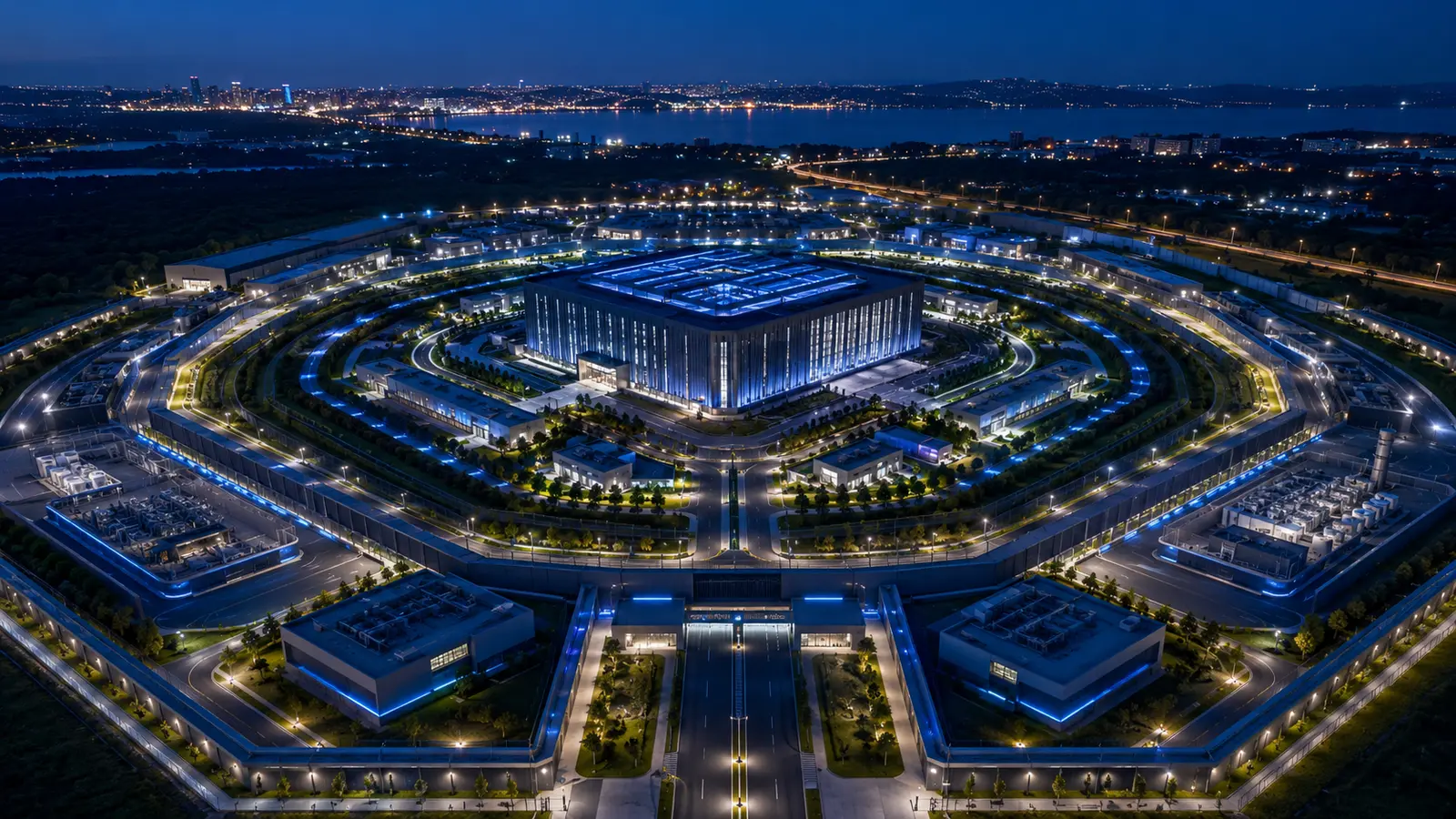
Define the sovereignty outcome before choosing technology
Identify the protected missions, data classes, users, jurisdictions, adversaries, and continuity obligations. Separate data residency, data sovereignty, operational sovereignty, technology sovereignty, and supply-chain sovereignty; each requires different controls. State which people and legal entities may access data or systems, where administration and support can occur, which foreign dependencies are tolerated, and what must continue during diplomatic, network, supplier, or cyber disruption. Convert policy language into testable service requirements and accepted residual risks.
Build a layered control and evidence model
Map jurisdiction and governance, site and physical security, hardware and firmware, network, identity and keys, platform and software, data and workloads, and audit evidence. For every layer define owner, trusted party, prohibited access, technical control, procedural control, monitoring, exception authority, and proof. Include out-of-band management, vendor telemetry, remote support, backups, logs, model artifacts, training data, and software update paths. Physical location alone is weak evidence if privileged administration, encryption keys, dependencies, or legal control sit elsewhere.
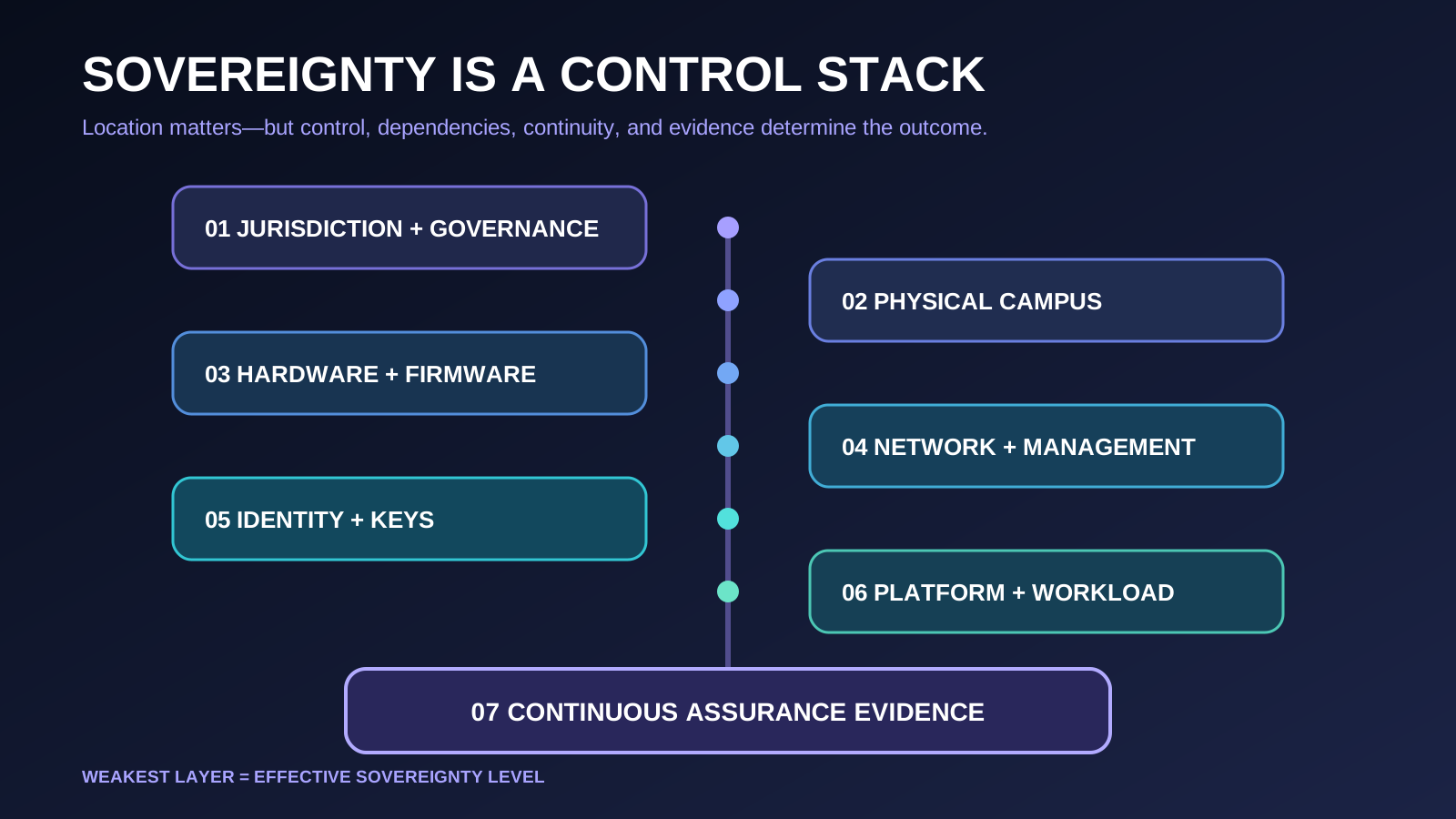
Choose jurisdiction, ownership, and operators as an architecture
Assess land and facility ownership, operating company, cloud or platform provider, equipment maintainers, security provider, data controller and processor roles, beneficial ownership, applicable law, government-access exposure, licensing, insolvency, sanctions, and step-in rights. Decide whether sovereign staff must operate specific layers and how their competence and clearance will be sustained. Contracts must preserve audit, incident response, data return, continuity, source or configuration escrow where justified, and orderly exit—not merely promise local hosting.
Sovereignty Requirements Matrix
| Dimension | Core question | Design response | Evidence |
|---|---|---|---|
| Data | Where can data, backups, logs, and models exist? | Classification, flow control, encryption and deletion | Observed flows, inventories and restore tests |
| Operations | Who can administer each layer and from where? | Sovereign operations, least privilege and controlled support | Access records and exercised procedures |
| Technology | Which external platforms and services are indispensable? | Portability, local control planes and dependency strategy | Disconnected and exit tests |
| Supply chain | Can components and updates be trusted and sustained? | Provenance, signing, staging, spares and alternatives | Custody, bills of materials and update records |
| Legal | Which entities and laws can compel access or interrupt service? | Ownership, contracts, keys, governance and step-in rights | Legal analysis, agreements and decision authority |
Sovereignty requirements differ by mission and jurisdiction. The matrix translates policy into evidence; it does not replace legal or national-security advice.
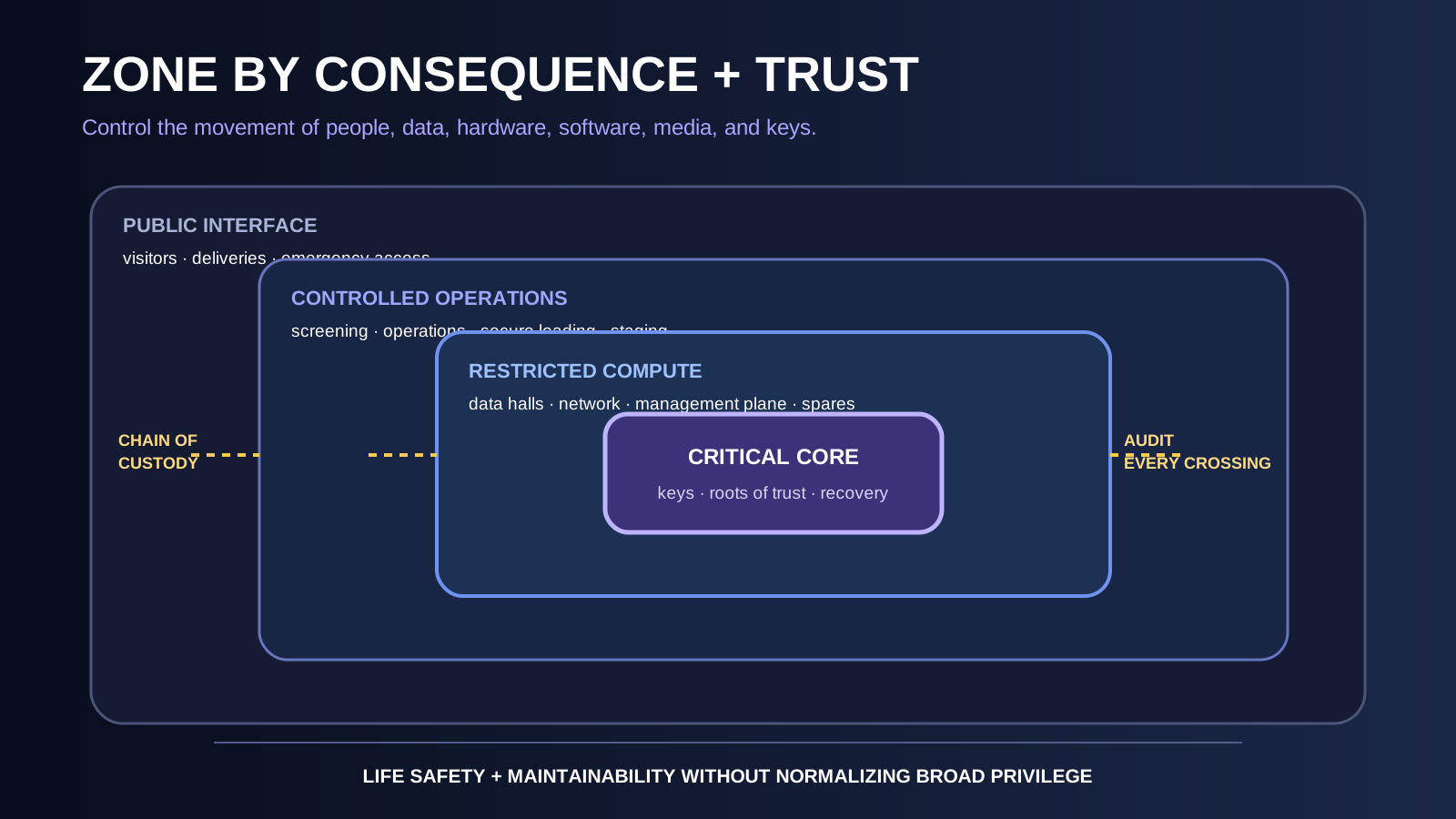
Zone the campus by consequence and chain of custody
Create public, controlled, restricted, and critical zones based on the impact of unauthorized access or interruption. Coordinate perimeter, stand-off, screening, vehicle routes, loading, secure storage, operations, security control, meet-me rooms, data halls, key-management systems, spares, waste, and emergency services. Define the movement and custody of people, hardware, removable media, firmware, data, and cryptographic material. Avoid shared routes or rooms that silently cross trust boundaries. Maintain life safety and maintainability without normalizing broad privileged access.
Engineer identity, encryption, and administration around zero trust
Authenticate and authorize every user, service, device, and administrative action according to least privilege and context. Use sovereign-controlled key management where required, hardware roots of trust, measured boot, signed software, secrets rotation, privileged-access management, multi-person control for critical actions, immutable audit, and segmented management planes. Design break-glass access with strict logging and review. Verify who can technically decrypt or administer the system—including suppliers during diagnosis—not only who the contract says should have access.
Treat supply chain and update paths as persistent attack surfaces
Maintain an approved component and supplier baseline covering hardware origin, firmware, software bills of materials, build systems, distribution channels, remote telemetry, licenses, support access, vulnerabilities, spares, and end-of-life. Define provenance, inspection, secure staging, signing, scanning, update approval, rollback, quarantine, and disposal. Decide how critical systems will operate if a supplier, cloud service, certificate authority, repository, or international route becomes unavailable. Sovereignty requires a sustainable patch and replacement path, not frozen technology.
Design national resilience beyond one hardened building
Model loss of grid, fiber, water, fuel, staff, supply chain, management plane, availability zone, and region. Align physical redundancy with application replication, data-consistency needs, recovery point and time objectives, and crisis governance. Use geographically and hazard-diverse sites where the mission requires them, with independent dependencies that are proven rather than assumed. Plan degraded sovereign operation, secure backups, offline recovery material, alternative communications, and controlled restoration. A second facility sharing the same grid corridor, carrier duct, identity service, or vendor control plane may not provide real independence.
Commission controls through adversarial and continuity scenarios
Verify physical barriers, alarms, access, chain of custody, identity, key ceremonies, segmentation, logging, backup restoration, software provenance, supplier access, emergency response, and regional failover. Run tabletop and live exercises for compromised credentials, malicious update, lost key custodian, denied external service, severed carrier, facility evacuation, utility outage, supplier withdrawal, and data-return or exit. Close findings through accountable evidence. Reassess after material change because sovereignty can erode through ordinary maintenance and convenience exceptions.
Sovereign Assurance Gates
| Gate | Minimum proof | Decision |
|---|---|---|
| Policy basis | Mission, data classes, jurisdictions, adversaries and residual risks | Approve the required sovereignty level |
| Architecture | Control layers, trust boundaries, dependencies and accountable owners | Approve detailed design and contracts |
| Supply acceptance | Provenance, custody, secure staging and configuration baseline | Admit hardware and software |
| Service acceptance | Control tests, recovery, adversarial scenarios and operator readiness | Release protected workloads |
| Continuous authorization | Current evidence, drift, exceptions, incidents and retests | Continue, constrain, or suspend operation |
Govern assurance as a continuously measured service
Maintain a control register linking legal obligation, threat, technical implementation, operating procedure, evidence source, test frequency, owner, exception, and expiry. Monitor privileged activity, cross-border flows, supplier connections, configuration drift, vulnerabilities, hardware custody, key status, recovery readiness, and service dependencies. Use independent assessment proportionate to consequence. Report control effectiveness and residual exposure to accountable leadership. Sovereign infrastructure is not certified once; it is kept sovereign by daily decisions that remain visible and reversible.
Early screening checklist
What to verify before advancing this site.
- Data, operational, technology, supply-chain, and legal sovereignty are distinguished
- Mission, data classes, jurisdictions, adversaries, and accepted residual risks are approved
- Every control layer has an owner, boundary, exception authority, and evidence source
- Ownership, operators, support parties, applicable law, step-in, and exit rights are mapped
- Physical zones control people, equipment, media, keys, waste, and emergency access
- Sovereign key control and privileged administration are technically verified
- Hardware, firmware, software, updates, spares, and disposal retain chain of custody
- Regional resilience does not share hidden utility, carrier, identity, or supplier dependencies
- Adversarial, disconnected, recovery, and supplier-withdrawal scenarios are exercised
- Continuous authorization measures drift, exceptions, evidence freshness, and residual exposure
What DCFR would flag
Risks surfaced at the screening stage.
DCFR would flag a sovereign AI proposal based mainly on national location or branding without explicit legal control, privileged-access boundaries, sovereign key custody, supply-chain provenance, dependency and exit tests, geographically credible resilience, and continuously refreshed assurance evidence.
Professional confirmation required
Items requiring licensed validation.
Confirm applicable law, data and security classification, ownership, operator eligibility, encryption and key control, physical protection, supply chain, network, resilience, audit, incident response, contracts, and exit requirements with competent legal, security, national-authority, owner, operator, technology, and licensed professional teams.
Final takeaway
Sovereignty is an operating capability: the continuing, provable power to control data, systems, people, suppliers, recovery, and change under the conditions that matter.
Screen up to 20 candidate sites before selecting one for the full DCFR report.
Each DCFR Report Package includes a preliminary 20-site comparison PDF / export package plus one selected planning-grade feasibility report.