DATA CENTER LAND SCREENING BEFORE DEEPER DILIGENCE

Screen data center land before acquisition momentum takes over.

DCFR helps brokers, land teams, developers, site selection consultants, economic development groups, and investors screen up to 20 candidate sites, expose early site-fit risks, and advance one selected parcel into a planning-grade feasibility report.

Before deeper diligence begins, know which site is worth advancing.

Up to 20 candidate sites
screened per package
Early site-fit
risk exposure
One selected site
advanced into a planning-grade report
Built for acquisition
investor & consultant handoff
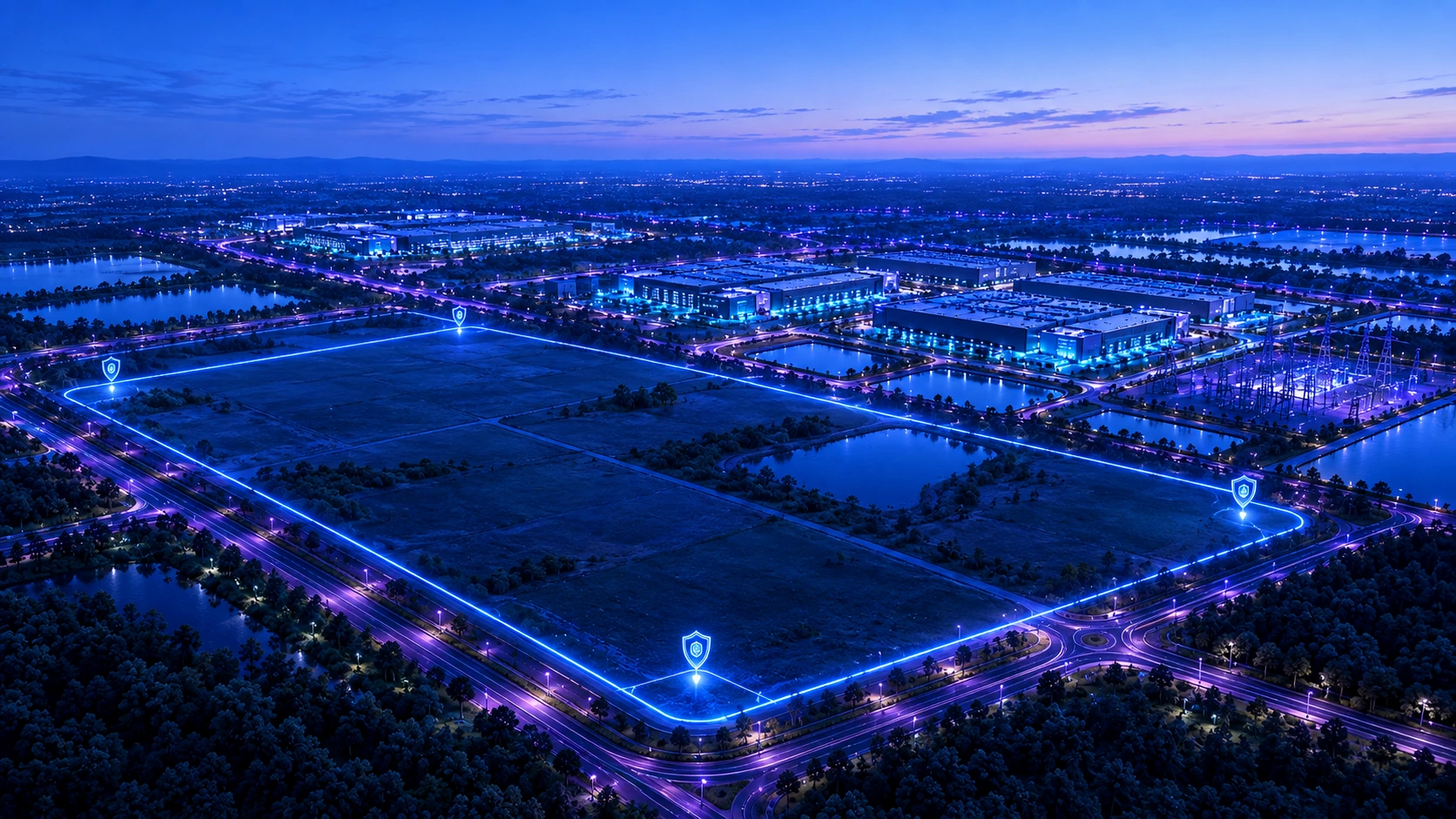
Aerial view of a data center campus with a blue site boundary

DCFR Workflow Preview

From raw land list to selected-site feasibility narrative.

DCFR organizes candidate parcels into a preliminary screening workflow, highlights visible development risks, and advances one selected site into a planning-grade report for acquisition review, investor discussion, and consultant handoff.

app.dcfr / site-review / new5 of 20 screened

Site Review Intake

Target Region

Dallas–Fort Worth

IT Load

40 MW

Parcel Size

42 acres

Cooling

Air-cooled / low-water

Redundancy

N+1

Sensitive Edge

East residential

Access

South road

Candidate Site Screening

Live screen
A

Site A

Lead

Capacity fit + utility proximity

StrongFit 92
B

Site B

Substation distance and headroom

RiskFit 54
C

Site C

Access edge constrained

ReviewFit 71
D

Site D

Stormwater + low-lying area

RiskFit 48
E

Site E

Expansion limited beyond Phase 1

ReviewFit 68

Preliminary screen ranks parcels on capacity fit, power exposure, access, stormwater, and expansion reserve. One site is then advanced into the full report.

Selected Report Output

01Site + Capacity Fit
02Power + Utility Exposure
03Code + Fire Access Logic
04Cooling + Water + Noise Risk
05Cost + Schedule + Risk Recommendation

Report Preview

DCFR Planning-Grade Report

  • 1 selected final site
  • 11×17 report pages where supported
  • Confirmation checklist included
  • Built for acquisition, investor & consultant handoff
Selected Site Output
1User inputs220-site preliminary screen31 selected planning-grade report

Who it's for

Built for teams deciding which land is worth pursuing.

DCFR is for professionals who need to screen data center land before committing acquisition time, consultant fees, investor attention, or utility conversations.

Industrial Land BrokersBrokerage

Industrial Land Brokers

Pain: Need to position land credibly for data center buyers.

DCFR benefit: Turn a parcel into a clearer data center site story before sending it to market.

Built for this audience
Data Center BrokersBrokerage

Data Center Brokers

Pain: Buyers ask why one site is stronger than another.

DCFR benefit: Support the conversation with planning-grade site screening logic.

Built for this audience
Land Acquisition TeamsAcquisition

Land Acquisition Teams

Pain: Too many candidate parcels and limited diligence bandwidth.

DCFR benefit: Compare sites before escalating to consultants.

Built for this audience
Mission Critical DevelopersDevelopment

Mission Critical Developers

Pain: A site can look good until yards, access, stormwater, and noise are tested.

DCFR benefit: Expose early site-fit constraints before project momentum builds.

Built for this audience
Site Selection ConsultantsConsulting

Site Selection Consultants

Pain: Not every site deserves a full technical workup.

DCFR benefit: Use DCFR as a preliminary filter before deeper due diligence.

Built for this audience
Economic Development GroupsEconomic Development

Economic Development Groups

Pain: Need to know whether local land can realistically support data center demand.

DCFR benefit: Identify readiness gaps before promoting a parcel.

Built for this audience

The problem

The land may look right. The site plan may still fail.

A data center site is not validated by acreage, zoning, or power proximity alone. The real test starts when building geometry, electrical yards, generator yards, cooling yards, truck courts, fire access, stormwater, buffers, and expansion reserve are placed together.

“40 acres” does not mean 40 MW fits.

Nearby power does not mean utility readiness.

Industrial zoning does not mean entitlement ease.

A parcel can fail because of yard area, not building area.

Residential edges can create noise and approval risk.

Stormwater can consume the land you thought was usable.

DCFR turns vague land claims into a structured feasibility decision.

What you avoid

What DCFR helps you avoid

Reduce early site-selection mistakes before deeper diligence, consultant engagement, or acquisition momentum begins.

Avoid chasing the wrong parcelRisk to avoid

Avoid chasing the wrong parcel

Catch obvious site-fit blockers before the deal gains momentum.

DCFR helps you avoid this
Avoid weak investor conversationsRisk to avoid

Avoid weak investor conversations

Show a clearer land story with site-fit assumptions, infrastructure exposure, and risk flags.

DCFR helps you avoid this
Avoid premature consultant engagementRisk to avoid

Avoid premature consultant engagement

Filter and narrow candidate sites before deeper technical diligence begins.

DCFR helps you avoid this
Avoid MW-only decision makingRisk to avoid

Avoid MW-only decision making

Megawatts alone do not prove that a parcel can support real development.

DCFR helps you avoid this

Desired outcome

What you need before deeper diligence begins.

Before engineers, attorneys, environmental consultants, utility teams, and investors enter the conversation, DCFR helps clarify whether a site deserves to advance.

A clearer shortlist

Know which candidate sites deserve serious attention.

A stronger site story

Explain why one selected site has a more credible data center path.

A better next-step checklist

Know what must be confirmed by utility, civil, code, environmental, legal, and engineering teams.

Removing uncertainty

DCFR removes the first obstacle: uncertainty.

Most teams do not need a full engineering package at the first conversation. They need a disciplined preliminary screen that shows where the land story is strong, where it is weak, and what must be confirmed next.

Before DCFR

Uncertainty

  • Scattered land list
  • Vague “data center ready” claim
  • Unclear power exposure
  • No site-fit logic
  • Weak investor narrative

After DCFR

Clarity

  • Preliminary screen of up to 20 sites
  • One selected site advanced
  • Planning-grade site logic
  • Risk flags
  • Confirmation checklist
  • Consultant handoff direction

How it works

From land list to decision-ready site narrative.

DCFR turns raw candidate parcels into a structured screening path and one selected-site report.

Bring the land listSTEP 01

Bring the land list

Submit up to 20 candidate parcels, addresses, or target locations.

Business value

Stop relying on disconnected broker notes and vague land claims.

Screen development fitSTEP 02

Screen development fit

DCFR evaluates site-fit logic, infrastructure exposure, access constraints, sensitive edges, stormwater, and planning assumptions.

Business value

Catch weak sites before acquisition momentum, consultant engagement, and investor expectations build.

Advance one selected-site reportSTEP 03

Advance one selected-site report

The strongest site is translated into a planning-grade feasibility package for acquisition review, investor discussion, and consultant handoff.

Business value

Move forward with a clearer site story, visible risks, and next-step confirmation items.

See which site is worth advancing.

Report scope

What the selected-site report gives you.

One site is translated into a planning-grade feasibility package that explains development logic, risk exposure, and next confirmation steps.

Site + Capacity FitMODULE 01

Report module

Site + Capacity Fit

See whether the parcel can physically support the target development logic.

Included in selected-site report
Power + Utility ExposureMODULE 02

Report module

Power + Utility Exposure

Frame power proximity, utility exposure, and confirmation-required items.

Included in selected-site report
Code + Fire Access LogicMODULE 03

Report module

Code + Fire Access Logic

Identify fire route, access, loading, and Authority Having Jurisdiction risks.

Included in selected-site report
Cooling + Water + Noise RiskMODULE 04

Report module

Cooling + Water + Noise Risk

Understand how cooling strategy, water exposure, and sensitive edges affect feasibility.

Included in selected-site report
Structure + Envelope + ConstructabilityMODULE 05

Report module

Structure + Envelope + Constructability

Frame early massing, envelope, structural, and constructability assumptions.

Included in selected-site report
Cost + Schedule + Risk RecommendationMODULE 06

Report module

Cost + Schedule + Risk Recommendation

Summarize key constraints and recommended next due diligence steps.

Included in selected-site report

Why start early

The cheapest site mistake is the one you catch early.

A single wrong site pursuit can consume acquisition focus, consultant conversations, investor confidence, and schedule momentum. DCFR is built for the moment before deeper due diligence starts.

Candidate sites

20

Candidate sites

Preliminary site screens included before one parcel is advanced.

Selected site

1

Selected site

One site advanced into a planning-grade feasibility report.

Report modules

6

Report modules

Site fit, power, fire access, cooling, constructability, and risk recommendation.

DCFR helps you decide whether to advance, pause, compare, or reject a site before more time, money, and stakeholder attention are committed.

Benefits of DCFR

Fast early feasibility before full diligence spend.

Use DCFR to decide whether a site deserves deeper consultant review. Traditional feasibility studies can take weeks and significant consultant engagement. DCFR gives brokers, land teams, developers, and investors a planning-grade site-screening report in minutes, at a fraction of the cost.

Traditional path

Consultant feasibility study

  • Often takes weeks to coordinate
  • Requires multiple consultant conversations
  • May cost thousands to tens of thousands depending on scope
  • Usually starts after a site is already being seriously pursued
  • Best for final due diligence, engineering, entitlement, and permit strategy

DCFR

Early feasibility screening

  • Planning-grade report generated in minutes
  • Screens up to 20 candidate sites before one is advanced
  • Helps expose early site-fit, power, access, cooling, fire access, stormwater, and risk issues
  • Built for brokers, land teams, developers, investors, and site selection teams
  • Designed to support advance / pause / compare / reject decisions before deeper spend
Minutes instead of weeks
Fraction of traditional consultant cost
Up to 20 candidate sites screened
One selected site advanced into a report

Use DCFR before deeper diligence begins — not after the wrong parcel has already consumed time, money, and stakeholder attention.

Planning-grade output. Final site capacity, code compliance, utility availability, civil design, cost, schedule, and permitting path require professional confirmation by licensed consultants, engineers, and authorities.

Methodology

Transparent assumptions. Planning-grade logic. Confirmation-ready next steps.

DCFR combines user-provided site inputs, rule-based data center planning assumptions, visible site/context constraints, and calculation-driven site-fit logic.

01

User-provided site inputs

02

Target IT load, cooling, redundancy, and phasing assumptions

03

Planning-grade data center geometry rules

04

Site-fit and infrastructure demand calculations

Disclaimer. DCFR does not provide final engineering, stamped drawings, permit approval, legal zoning opinion, utility capacity guarantee, environmental clearance, contractor pricing, or authority approval.

Planning-grade decision support, not final engineering.

Outputs separate calculated assumptions from items requiring licensed professional confirmation. DCFR is an early-stage feasibility judgment, not an engineering, permit, or entitlement deliverable.

Know which site is worth advancing.

Start with up to 20 preliminary candidate site screens and advance one selected site into a planning-grade DCFR report.

Screen before the wrong site gains momentum.