
DCFR Insight 56 / Performance Assurance
Data Center Sustainability Metrics, Disclosure, and Assurance
The final sustainability system is evidence: controlled boundaries, calibrated meters, traceable data, explicit uncertainty, reconciled claims, and independent assurance strong enough to expose uncomfortable performance.

Begin with a claim-and-control register
List every internal target, customer statement, permit condition, financing covenant, voluntary commitment, rating input, and public claim. For each, define wording, purpose, owner, approval authority, facilities, organizational and operational boundary, metric, baseline, interval, geography, method version, source data, estimation, uncertainty, exclusions, evidence retention, assurance level, and correction process. Link design requirements and contracts to the same register. If two claims use different boundaries—such as landlord operations and tenant information-technology load—preserve both and prohibit casual comparison.
Freeze boundaries before selecting favorable data
Document utility and campus interfaces, tenant space, shared plant, offices, construction, on-site generation, exported energy, storage charge and discharge, backup generation, water sources and discharge, heat export, refrigerants, embodied assets, hardware, waste, and value-chain activities. Define initial, committed, and ultimate capacity plus acquisition and disposal rules. Use a controlled boundary diagram and meter schedule. Changes must state effective date, reason, quantitative effect, approver, and whether history is restated; otherwise expansion, outsourcing, or asset transfer can create an artificial performance improvement.
Build a measurement hierarchy that survives audit
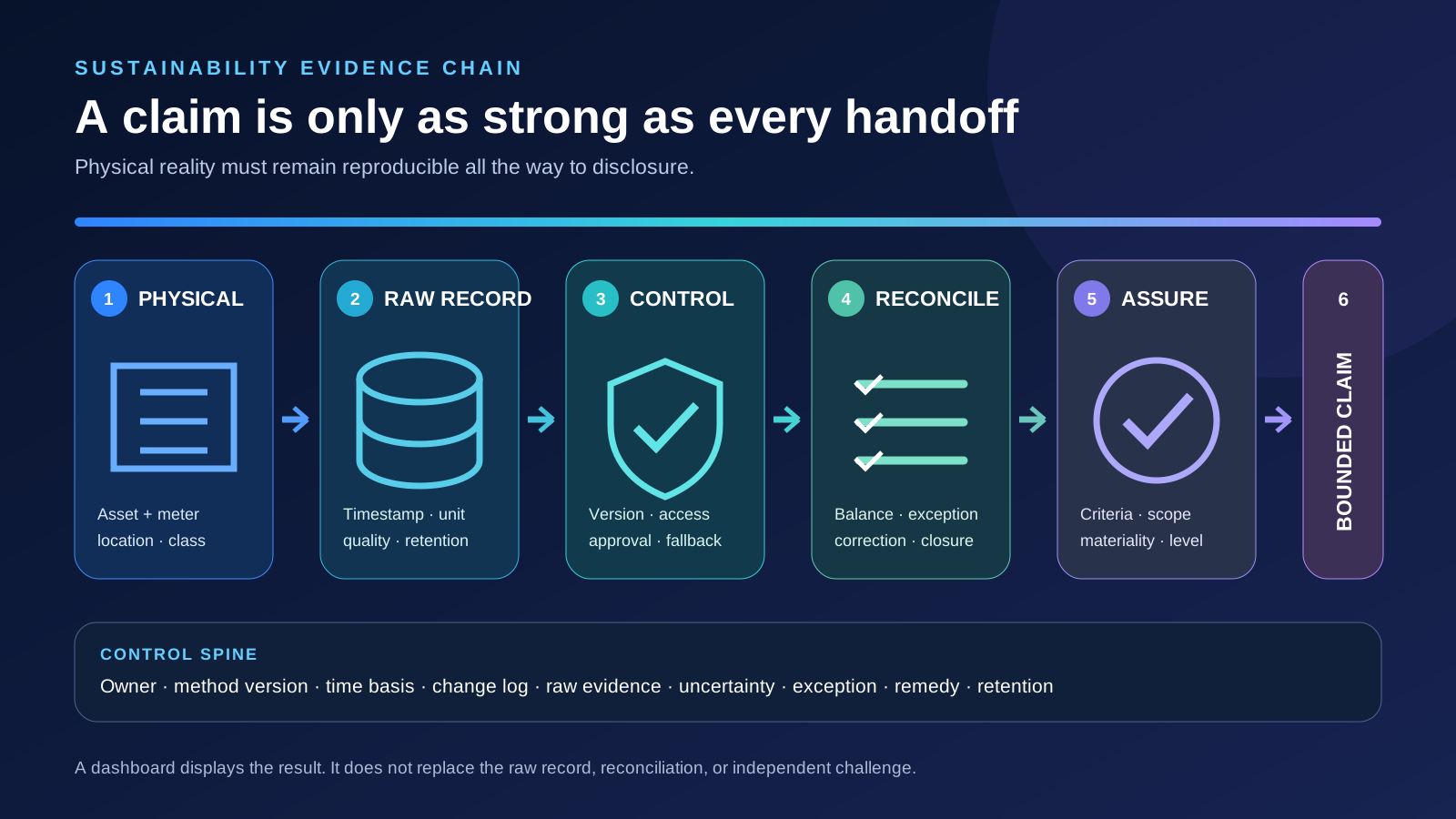
Prioritize calibrated revenue and custody-transfer meters, then commissioned submeters, equipment telemetry, controlled calculations, supplier data, and conservative estimates. Establish meter class, location, sampling interval, time synchronization, calibration, communication health, data owner, and fallback for every point. Reconcile electrical, water, thermal, fuel, refrigerant, material, and waste balances to independent totals. Flag gaps automatically and preserve raw data, corrections, calculation code, factors, approvals, and source documents. A dashboard is a presentation layer, not the system of record.
Use standard metrics—and state what each omits
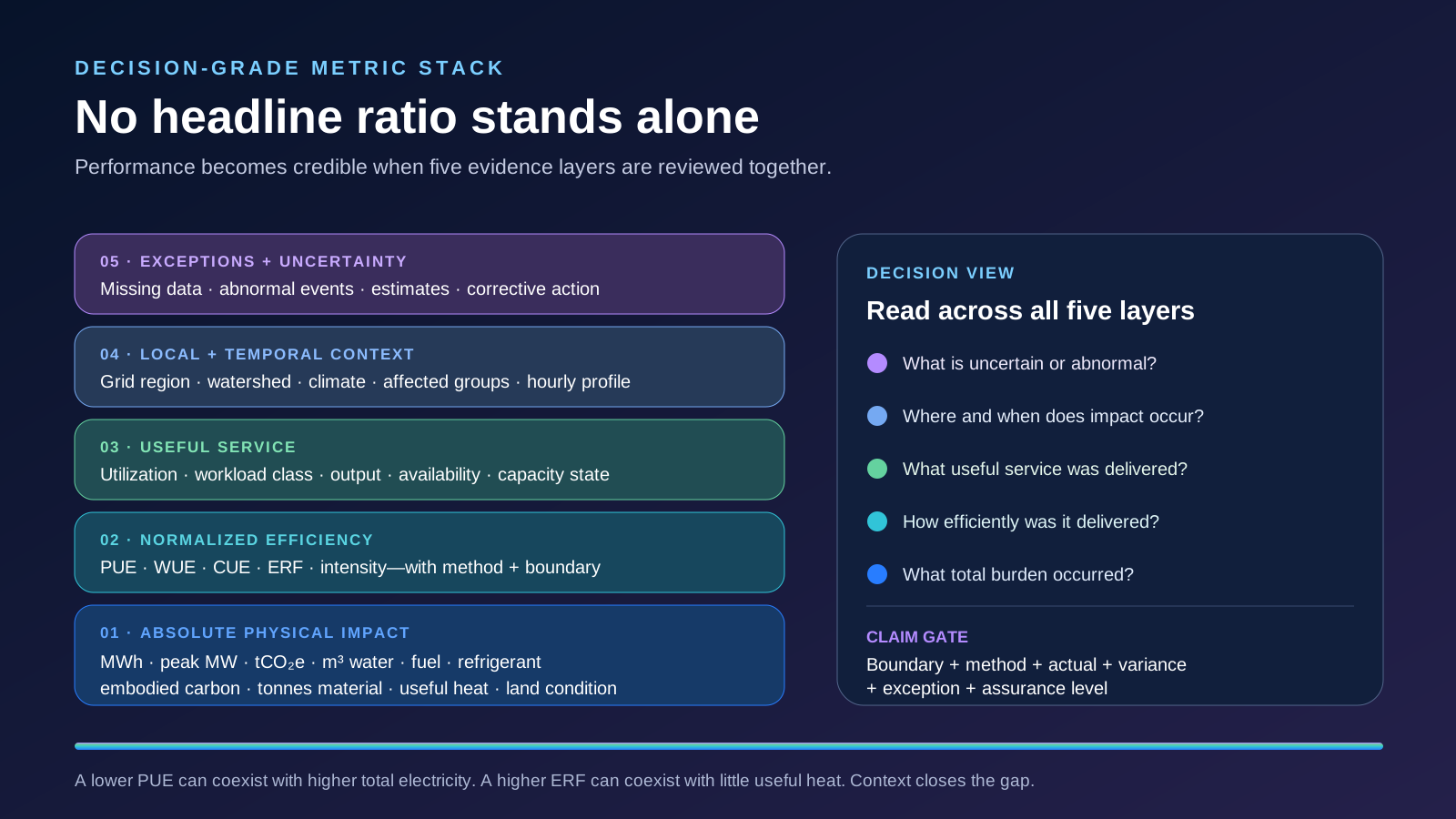
Power Usage Effectiveness describes facility overhead relative to information-technology energy; Water Usage Effectiveness describes site water relative to information-technology energy; Carbon Usage Effectiveness associates emissions with that energy boundary; Energy Reuse Factor describes exported energy relative to facility energy. Each depends on boundary, period, operating condition, and data quality, and none measures useful computation, absolute growth, local grid deliverability, basin stress, embodied carbon, biodiversity, or social outcome. Follow current published standards where applicable and disclose method version rather than inventing a favorable variant.
Pair ratios with absolute totals and useful service
Report total electricity, peak demand, emissions by scope and method, hourly carbon-free-energy match, water withdrawal and consumption by source, generator fuel and hours, refrigerant loss, useful heat delivered, embodied carbon, material and hardware flows, land condition, and community commitments. Show ratios alongside information-technology capacity, actual utilization, workload class, useful output where consistently defined, weather, availability, and growth. A falling efficiency ratio can accompany rising total impact; a useful-output measure can improve while local infrastructure burden still grows. Both views belong in the decision pack.
Sustainability Metric Decision Matrix
| Metric | Decision supported | Required companion | Cannot prove alone |
|---|---|---|---|
| PUE | Facility-infrastructure efficiency | Total energy, load, utilization, climate and availability | Efficient computing or low carbon |
| WUE | Site-water intensity | Absolute withdrawal and consumption, source and basin context | Low watershed impact |
| CUE | Operational carbon intensity on its defined energy boundary | Absolute emissions, grid method, hourly profile and embodied carbon | Whole-life decarbonization |
| ERF | Share of facility energy exported for reuse | Useful delivered heat, temperature, losses and parasitic energy | Community value or net emissions benefit |
| Hourly CFE | Time- and location-matched clean electricity | Annual inventory, unmatched hours, deliverability and attributes | Automatic additionality or zero impact |
Use the current published method, show absolute totals, and keep scope, boundary, period, location, and uncertainty beside every metric.
Engineer data lineage from asset to disclosure
Give every reported field a stable identifier, unit, sign convention, source, transformation, aggregation rule, factor, time basis, quality flag, and responsible owner. Control software and model versions, access, segregation of duties, cybersecurity, manual adjustment, and approval. Test daylight-saving changes, duplicate and missing intervals, meter rollover, unit conversion, tenant allocation, estimation, factor updates, acquisitions, and late supplier data. Reproduce a published number from retained source evidence without depending on one analyst's spreadsheet. Treat sustainability data with the rigor used for capacity, billing, and safety systems.
Separate enacted disclosure from evolving policy
Map every facility to applicable reporting thresholds and jurisdictions. In the European Union, the Energy Efficiency Directive and Delegated Regulation (EU) 2024/1364 establish reporting rules for in-scope data centers; related Union rating and minimum-performance work continues to evolve. Build a crosswalk from required indicators to controlled source data, responsible entity, reporting portal, assurance, and publication status. Track effective dates and official adoption. Consultation proposals, draft accounting revisions, voluntary methods, and anticipated ratings should guide readiness but must not be presented as final law or current compliance criteria.
Match assurance depth to claim consequence
Use management review for operational steering, internal audit for control effectiveness, supplier validation for purchased evidence, limited or reasonable independent assurance for material external disclosures as appropriate, and certification only within the stated scheme scope. Define subject matter, criteria, period, materiality, sampling, sites, data systems, exclusions, competence, independence, and report form before work begins. Assurance over selected metrics is not assurance over the whole sustainability narrative. Rotate attention toward estimates, manual entries, boundary changes, certificates, offsets, avoided-impact claims, and other areas with high judgment or incentive.
Make exceptions and corrections visible
Maintain an exception register for meter failure, missing supplier evidence, abnormal weather, generator events, drought operation, refrigerant release, construction variance, attribute invalidation, missed commitment, and model change. Record impact, interim method, uncertainty, owner, due date, corrective action, and closure evidence. Define thresholds for escalation, claim suspension, customer notice, regulator notification, and public correction. Never silently replace actual adverse data with modeled normal operation. Restate history when an error is material and preserve the reason for every revision.
Claim Assurance Levels
| Level | Typical use | Minimum control | Permitted wording |
|---|---|---|---|
| Modeled | Design option or forecast | Approved assumptions, scenarios and versioned model | Projected or estimated—never achieved |
| Measured | Operational management | Calibrated data, reconciliation and exception review | Measured within the stated boundary |
| Internally reviewed | Management and customer governance | Independent internal testing of data and controls | Reviewed internally; scope disclosed |
| Independently assured | Material external claim | Defined criteria, materiality, evidence and assurance report | Assured only to the reported scope and level |
| Certified | Named standard or scheme | Accredited process and valid certificate | Certified to the exact scheme—not universally sustainable |
Turn disclosure into a continuous operating loop
Set leading indicators, alarm thresholds, operational reviews, monthly reconciliation, quarterly governance, annual assurance, and event-triggered reassessment. Connect deviations to work orders, procurement, workload policy, capital planning, supplier remedies, and public claim control. Give operators enough context to act without compromising safety or availability. Publish target, actual, boundary, method, trend, uncertainty, exceptions, corrective action, and progress against absolute as well as normalized goals. The purpose of measurement is not a polished annual report; it is earlier, better intervention.
Early screening checklist
What to verify before advancing this site.
- Every target and public statement exists in a controlled claim-and-control register
- Boundaries include capacity state, tenants, shared systems, exports, backups, and change rules
- Meters have class, interval, time basis, calibration, owner, health, and fallback defined
- Energy, water, heat, fuel, refrigerant, material, and waste balances are reconciled
- PUE, WUE, CUE, ERF, and other metrics cite method version and disclose limitations
- Ratios appear with absolute totals, utilization, useful service, climate, and local context
- Raw data, factors, transformations, approvals, code, corrections, and documents are retained
- Enacted rules are separated clearly from consultations, drafts, and voluntary commitments
- Assurance scope, criteria, period, materiality, independence, and level match claim consequence
- Exceptions can suspend claims, trigger correction, and drive operational or capital action
What DCFR would flag
Risks surfaced at the screening stage.
DCFR would flag a sustainability report built from dashboard ratios and selected certificates without controlled boundaries, meter reconciliation, method versions, absolute impacts, useful-service context, data lineage, exceptions, corrective action, and assurance matched to the consequence of each claim.
Professional confirmation required
Items requiring licensed validation.
Confirm applicable regulation, reporting thresholds, standards editions, organizational and operational boundaries, accounting rules, meter requirements, cybersecurity, data retention, assurance criteria, claim wording, and correction duties with the owner, operators, customers, utilities, qualified engineers, accountants, counsel, regulators, and independent assurance provider.
Final takeaway
A credible sustainability claim is not the metric on the dashboard; it is the entire controlled path from physical reality to a statement that can survive independent challenge.
Screen up to 20 candidate sites before selecting one for the full DCFR report.
Each DCFR Report Package includes a preliminary 20-site comparison PDF / export package plus one selected planning-grade feasibility report.