
DCFR Insight 53 / Water Stewardship
Water-Positive Data Centers: Cooling, Capacity, and Watershed Stewardship
A water-positive claim is credible only when the facility first reduces local consumption and risk, operates safely through drought, protects water quality, and then delivers independently verified watershed benefits beyond its residual impact.
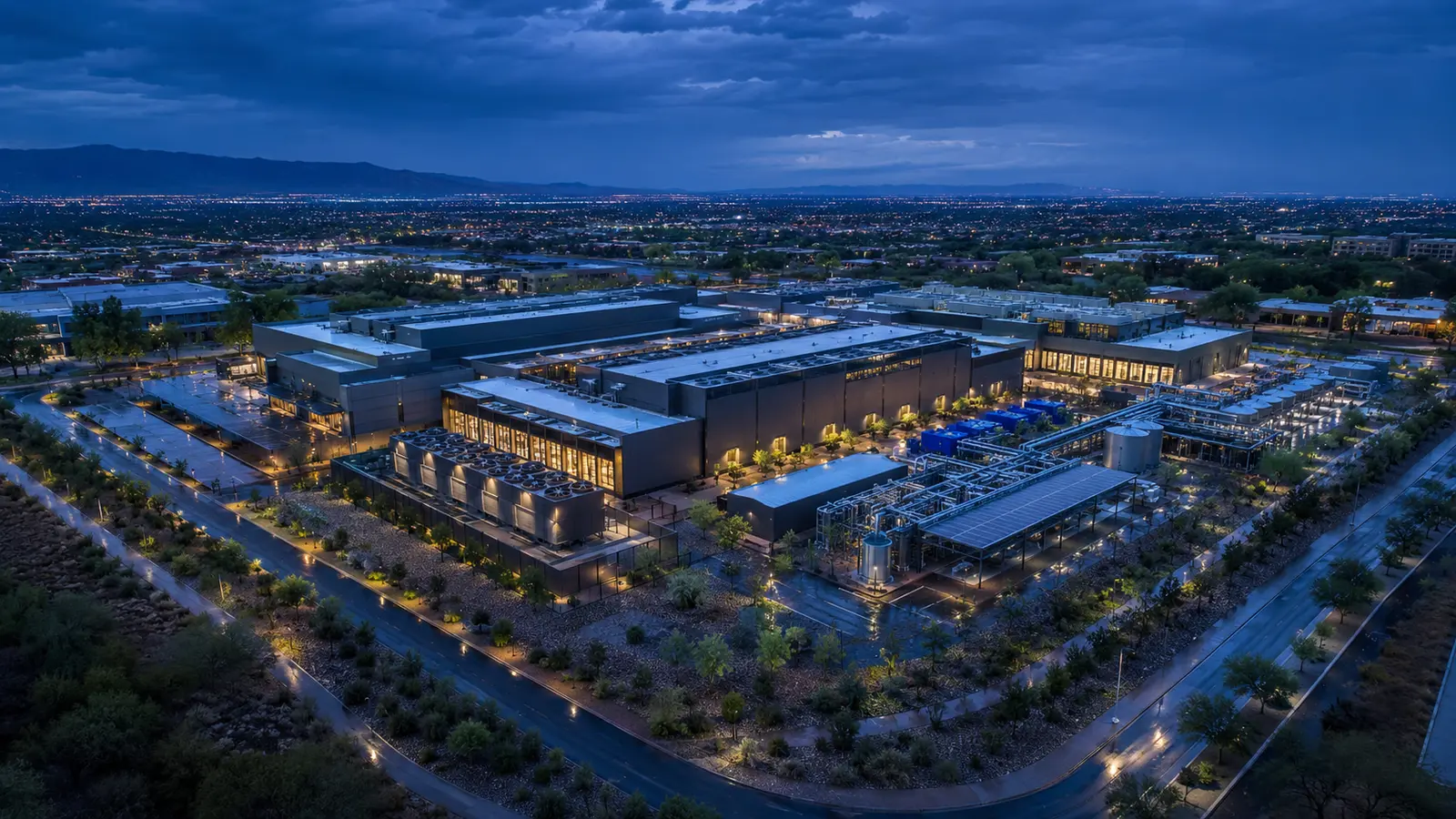
Define water-positive as a local, time-bound outcome
State the watershed, facility boundary, operating period, water sources, affected users, baseline, residual consumption, discharge, replenishment interventions, durability, and evidence standard. Separate water withdrawal, consumption, discharge, quality, and access; they describe different consequences. A global replenishment volume does not neutralize local scarcity, and a project cannot credibly claim water-positive operation while excluding construction, tenant loads, backup operations, or material sources without disclosure. Use the claim only after measured operational impact and verified local benefits exceed the defined residual burden over a stated period.
Screen sites for present and future watershed risk
Use basin-scale tools as screening evidence, then validate with local hydrology, utility plans, permits, drought rules, environmental flows, source reliability, water quality, competing demand, Indigenous and community rights, climate projections, and planned development. Assess surface water, groundwater, potable networks, reclaimed-water systems, and the electricity supply's water dependency. A low-risk national average can conceal a stressed sub-basin or a fragile municipal system. Compare brownfield reuse, dry-cooling climates, alternative grid locations, and phasing before treating water supply as a downstream mechanical-design issue.
Build a complete facility and value-chain water budget
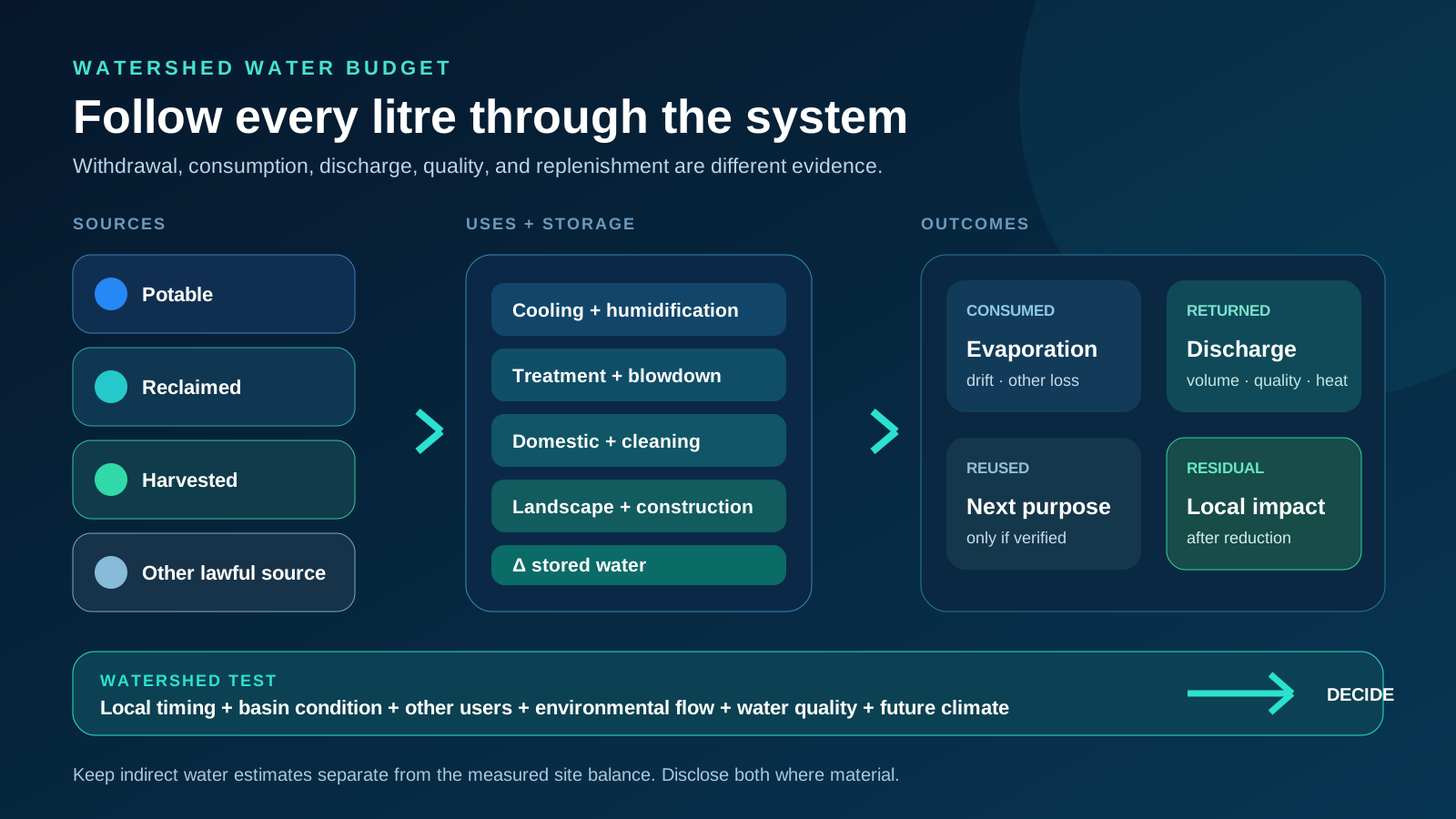
Meter incoming potable, reclaimed, surface, groundwater, and harvested sources separately. Allocate use to cooling, humidification, water treatment, domestic demand, landscape, fire-system testing, construction, cleaning, and tenants. Quantify evaporation, drift, blowdown, leaks, sanitary discharge, process discharge, exported water, and change in storage. Estimate electricity-generation and hardware-manufacturing water separately where decision-relevant rather than merging modeled indirect impact into measured site use. Report both absolute volumes and Water Usage Effectiveness with boundary, load, weather, source, quality, and uncertainty.
Optimize the energy-water-carbon system, not one ratio
Compare air-cooled, evaporative, adiabatic, hybrid, water-cooled, and heat-rejection architectures across a full weather year, rack-density cohorts, supply temperatures, water chemistry, grid emissions, scarcity periods, and future climate. Dry operation may lower direct water consumption while increasing electricity and upstream water; evaporative cooling may save energy but intensify local basin stress. Model annual totals, peak demand, drought performance, parasitic energy, plume, noise, maintenance, and capital together. Select controls that change mode according to real environmental limits rather than optimizing only Power Usage Effectiveness or Water Usage Effectiveness.
Water Claim Evidence Framework
| Claim element | Required evidence | Decision test | Common failure |
|---|---|---|---|
| Withdrawal | Calibrated source meters and invoices | Can every incoming source be reconciled? | Maximum allocation is reported as actual use |
| Consumption | Measured balance of inflows, returns and storage | Is water no longer available to the local system? | Withdrawal and consumption are treated as identical |
| Water quality | Source and discharge sampling with permit limits | Are ecological and human uses protected? | Volume reduction conceals a poorer discharge |
| Watershed risk | Local assessment plus current and future scenarios | Can the facility operate within basin limits? | A global risk score replaces local validation |
| Replenishment | Additional, local, durable and verified outcome | Does benefit exceed residual impact in place and time? | Remote pledged volume is called water-positive |
Report potable and non-potable sources separately; never use a single ratio to describe basin impact.
Understand what liquid cooling does—and does not—solve
Direct-to-chip and immersion systems can raise heat-transfer efficiency, support warmer facility water, reduce air movement, and improve heat-reuse potential. They do not automatically eliminate site water consumption: the ultimate heat-rejection system may still evaporate water, and fluid production, treatment, leaks, maintenance, and electricity carry impacts. Define primary and technology-cooling-system loops, isolation, coolant chemistry, materials compatibility, leak detection, heat exchangers, redundancy, warm-water setpoints, and end-of-life fluid custody. Evaluate liquid cooling as part of the whole thermal and watershed architecture.
Match water quality to use and protect the source
Reserve potable water for uses that require potable quality. Assess reclaimed municipal effluent, industrial reuse, harvested rainwater, treated blowdown, and other lawful sources for availability, seasonal quantity, microbiology, dissolved solids, corrosion, scaling, treatment energy, chemicals, storage, odor, worker exposure, and discharge implications. Secure dual-source or reduced-load strategies where a reclaimed supply is interruptible. Water reuse is beneficial only when it does not deprive an existing beneficial use or create a more damaging waste stream. Agree source hierarchy and quality limits with the utility, regulator, operator, and public-health specialists.
Engineer explicit drought and failure modes
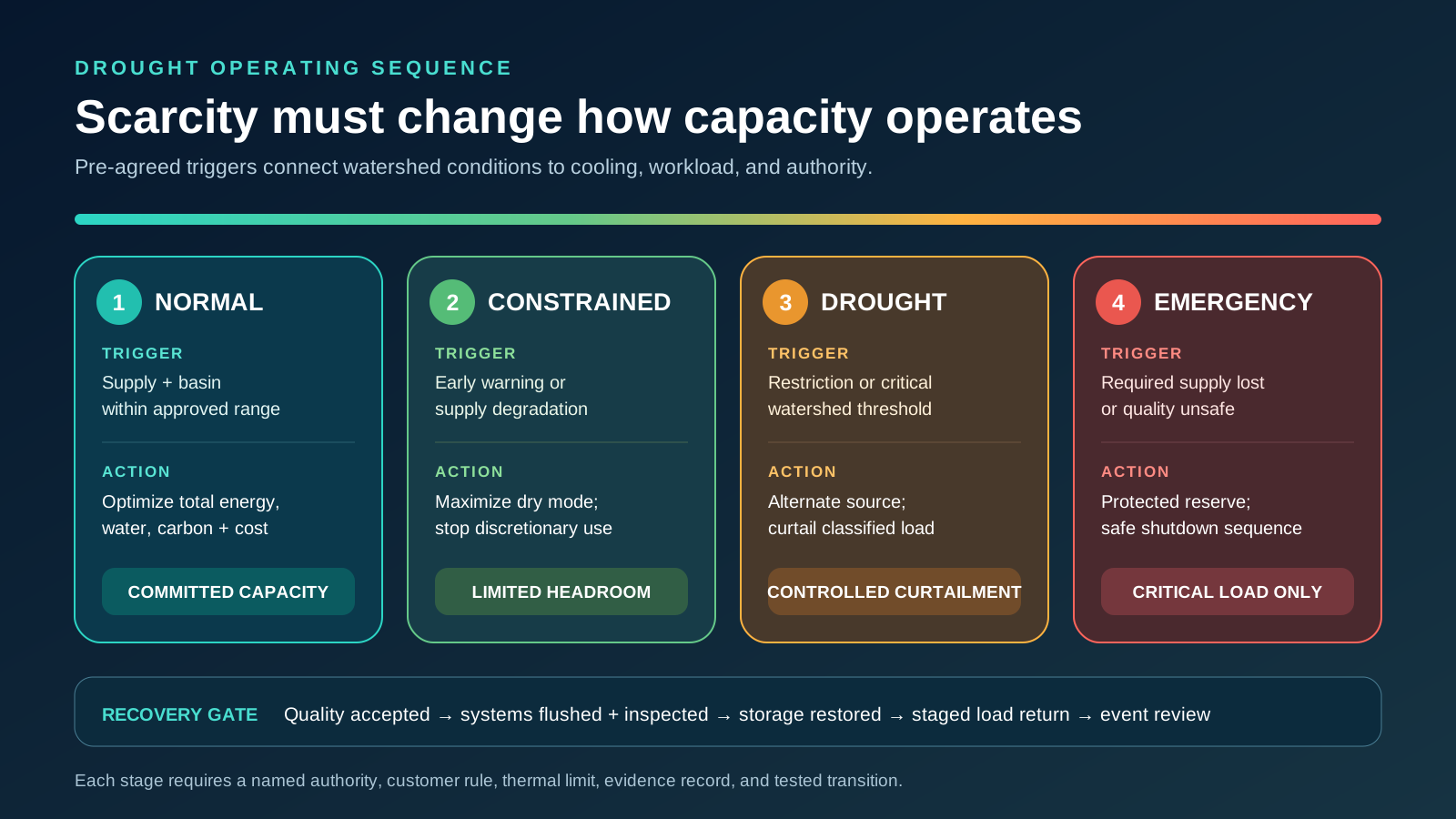
Define triggers using utility restrictions, basin status, reservoir or aquifer conditions, water quality, forecast heat, and on-site storage. For each stage, document cooling mode, allowable information-technology load, thermal envelope, redundancy, water allocation, refill rule, workload action, customer notification, and authority to curtail. Test coincident heat wave, grid stress, degraded water quality, pump or treatment failure, fire-water reservation, and delayed resupply. Storage should bridge a defined event, not justify an unsustainable normal demand. Controls, contracts, and capacity commitments must all recognize the same drought sequence.
Control chemistry, blowdown, and receiving-water impact
Establish cycles of concentration, conductivity, pH, microbiological control, drift limits, chemical inventory, blowdown treatment, discharge temperature, sampling, and permit thresholds. Assess concentration of source contaminants and interaction among treatment chemicals. Provide accessible meters and sample points, automated alarms, safe drain routing, containment, and response plans. Optimize water treatment against both consumption and effluent quality: reducing blowdown without chemistry control can damage equipment or degrade discharge. Include plume, aerosol, legionella, and worker-safety management where cooling towers or evaporative systems are used.
Drought Operating Modes
| Mode | Trigger | Cooling and water action | Capacity consequence |
|---|---|---|---|
| Normal | Supply and basin within approved range | Optimize energy-water-carbon tradeoff | Committed load available |
| Constrained | Early utility or watershed warning | Maximize dry mode, stop discretionary use, inspect losses | Defined efficiency or reserve reduction |
| Drought | Restriction or critical basin threshold | Prioritize life safety and essential cooling; activate alternate source | Curtail or migrate classified workloads |
| Emergency | Loss or unsafe quality of required supply | Use protected storage and safe shutdown sequence | Only protected critical load remains |
| Recovery | Source restored and quality accepted | Flush, treat, inspect, refill and revalidate | Staged return prevents rebound demand |
Use replenishment to improve the affected watershed
After avoidance, efficiency, reuse, and operational resilience, identify interventions with local stakeholders: leakage reduction, agricultural efficiency with protected environmental flows, wetland or floodplain restoration, aquifer recharge, source-water protection, reuse infrastructure, or access improvements. Establish additionality, counterfactual, hydrologic connection, timing, duration, ownership, maintenance, social safeguards, measurement, and reversal risk. Count verified beneficial volume conservatively and disclose co-benefits separately. Replenishment complements responsible operation; it is not permission to impose an unmanaged local burden.
Commission the water balance and keep it under control
Commission meters, calibration, data timestamps, leak detection, treatment controls, isolation, source changeover, makeup and blowdown sequences, drift control, storage, discharge monitoring, and every drought stage. Reconcile submeter totals with utility invoices and investigate unexplained balance error. Trend consumption against information-technology energy, weather, chemistry, mode, and source; use absolute water and stress-weighted context alongside Water Usage Effectiveness. Publish exceptions and corrective actions. Reassess the watershed, permits, demand forecast, cooling technology, and replenishment portfolio whenever capacity, climate, or local conditions materially change.
Early screening checklist
What to verify before advancing this site.
- The claim defines watershed, sources, boundaries, period, residual impact, and verification
- Site selection tests local hydrology, climate change, competing demand, and environmental flows
- Withdrawal, consumption, discharge, quality, and indirect water are reported separately
- Cooling options are compared across energy, water, carbon, heat, noise, and resilience
- Liquid-cooling loops and ultimate heat rejection are included in the water boundary
- Potable, reclaimed, harvested, and other sources have approved quality and source hierarchy
- Normal, constrained, drought, emergency, and recovery modes have tested triggers
- Chemistry, blowdown, temperature, drift, and receiving-water limits are monitored
- Replenishment is local, additional, durable, socially safe, and independently verified
- Meter reconciliation, balance error, exceptions, and corrective actions are governed
What DCFR would flag
Risks surfaced at the screening stage.
DCFR would flag a water-positive claim based on pledged replenishment volume alone, without a measured facility balance, local watershed boundary, drought operating plan, water-quality controls, hydrologic additionality, durability, community safeguards, and independent verification.
Professional confirmation required
Items requiring licensed validation.
Confirm source rights, utility capacity, drought restrictions, public-health requirements, treatment chemistry, discharge permits, environmental flows, cooling safety, watershed interventions, accounting boundaries, and claims with the owner, utility, regulators, qualified engineers, hydrologists, ecologists, community representatives, and assurance provider.
Final takeaway
A water-positive data center earns the claim in its own watershed: reduce and control consumption first, survive scarcity safely, protect water quality, and verify benefits that exceed the residual burden.
Screen up to 20 candidate sites before selecting one for the full DCFR report.
Each DCFR Report Package includes a preliminary 20-site comparison PDF / export package plus one selected planning-grade feasibility report.