
DCFR Insight 54 / Whole-Life Carbon
Low-Carbon Data Centers: Embodied Carbon, Circularity, and Adaptable Design
Fast construction and rapid hardware refresh can lock in decades of material impact. Whole-life carbon design treats the site, structure, equipment, refrigerants, replacements, and end of life as one controlled carbon and circularity ledger.
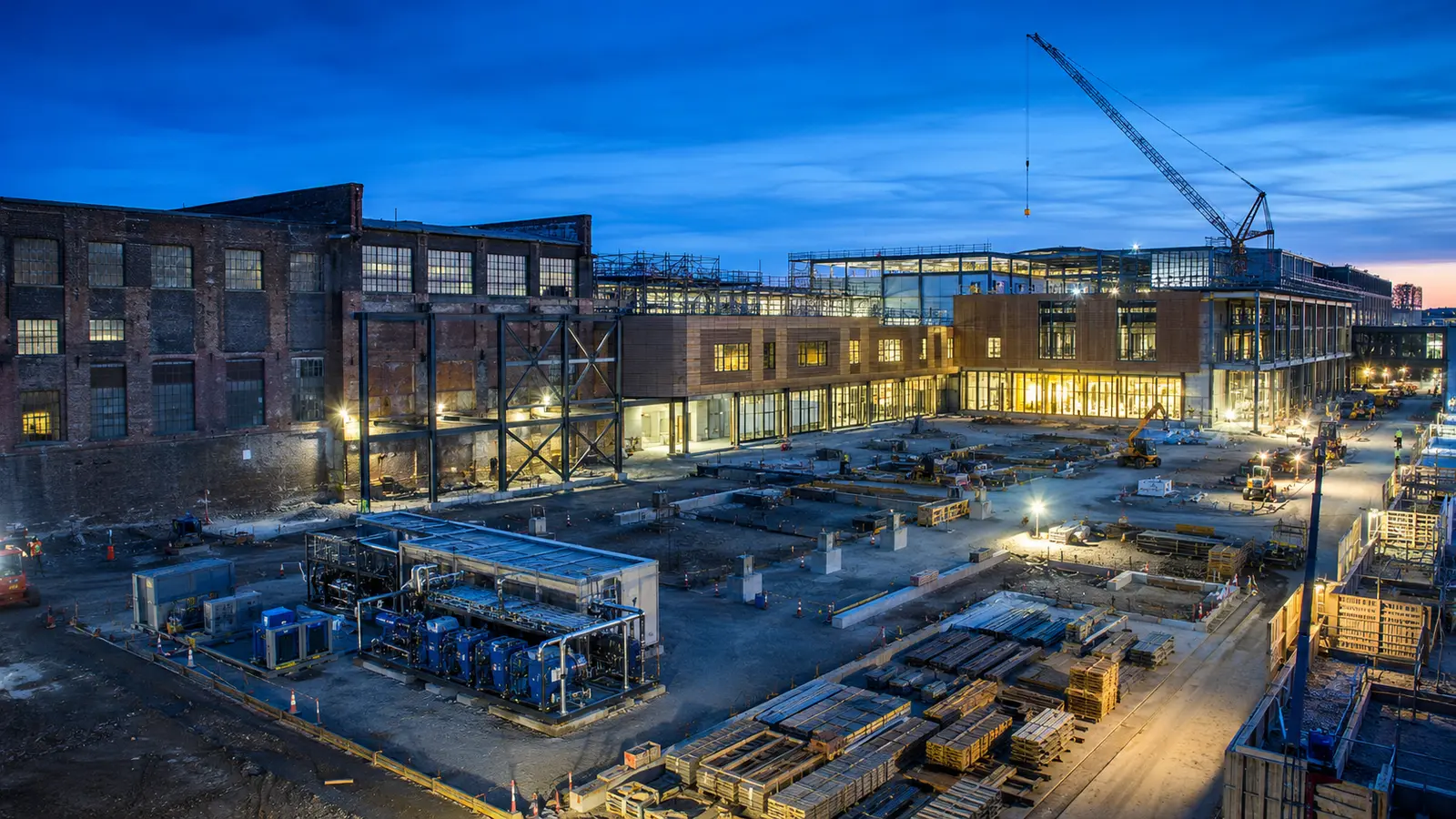
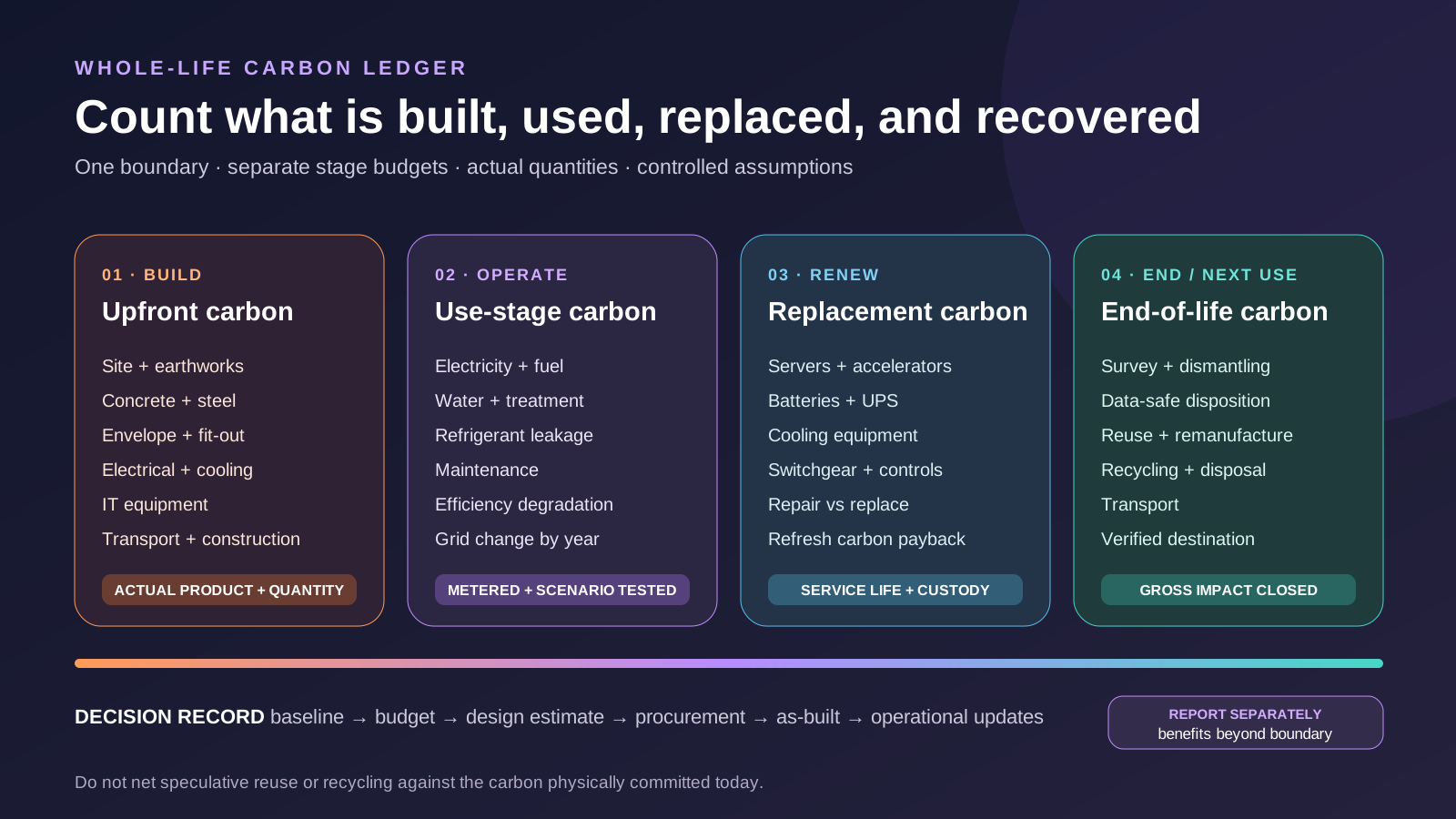
Set one whole-life boundary and several decision budgets
Define study period, site, building, shell, structure, electrical and mechanical systems, backup power, batteries, refrigerants, fit-out, information-technology hardware, construction activity, replacements, maintenance, operational energy, transport, and end of life. State which life-cycle modules and benefits beyond the project boundary are included. Maintain separate budgets for upfront, use-stage, operational, replacement, and end-of-life carbon so a speculative recycling credit cannot hide excessive construction impact. Record capacity, redundancy, utilization, floor area, and useful service alongside absolute kilograms of carbon dioxide equivalent.
Create a comparable baseline before form and procurement lock in
Build a reference design that delivers the same information-technology capacity, rack-density range, availability, climate duty, phase plan, and study life. Use it to allocate carbon limits by work package and decision gate. Test demand reduction, existing-building reuse, density, structural grid, floor loading, clear height, plant topology, redundancy, and future expansion early; these choices determine quantities long before product data arrive. Preserve assumptions, data dates, service lives, grid scenarios, uncertainty, and exclusions so savings remain comparable through design changes.
Prefer capacity without new construction
First improve utilization, retire stranded infrastructure, consolidate whitespace, upgrade controls, and reuse powered shell or existing campus capacity. Evaluate brownfield structures, foundations, substations, cable routes, cooling assets, roads, and water systems with condition, contamination, adaptability, energy, and resilience assessments. Retention has value only when the asset can deliver the required service safely; forced reuse that creates excessive operating impact or early replacement can be counterproductive. Quantify retained material and avoided work explicitly instead of awarding a generic reuse credit.
Whole-Life Carbon Work Breakdown
| Package | Early decision | Minimum evidence | Typical blind spot |
|---|---|---|---|
| Site and structure | Reuse, compactness, grid, loading and span | Quantities plus comparable product data | Overdesign is hidden by low-carbon material claims |
| Electrical systems | Topology, voltage, redundancy and service life | Equipment inventory, losses and replacement model | Switchgear, copper and batteries are omitted |
| Cooling systems | Temperature, heat rejection, density and redundancy | Equipment, refrigerant and efficiency records | Leaks and midlife replacements are excluded |
| IT hardware | Utilization, refresh, upgrade and redeployment | Asset-level energy, embodied and custody data | Operational savings ignore replacement carbon |
| Construction and end of life | Methods, logistics, adaptability and recovery | Metered site data and verified destination | Unverified recycling is counted as achieved |
Maintain absolute totals and separate life-cycle stages; disclose any benefits beyond the project boundary rather than netting them invisibly.
Attack structural and material hotspots with quantities
Track concrete volume and strength, cement content, reinforcement, structural steel, decking, envelope, paving, and earthworks from the cost plan and model. Reduce load paths, spans, overdesign, slab thickness, foundations, and hardscape before substituting materials. Then procure lower-carbon mixes, responsibly sourced steel, recycled content, optimized sections, and verified regional products consistent with durability, fire, thermal, electrical, and schedule requirements. Use product-specific environmental declarations only when their product category rules, declared unit, geography, plant, validity, and life-cycle scope are comparable.
Put MEP equipment and refrigerants inside the ledger
Electrical and mechanical systems can dominate replacement cycles even when structure receives most attention. Quantify switchgear, transformers, uninterruptible power supplies, busway, cable, generators, chillers, cooling towers, pumps, air systems, liquid-cooling distribution, batteries, fire systems, and controls. Include manufacturing, transport, commissioning losses, maintenance, replacement frequency, efficiency degradation, and end-of-life treatment. Create a refrigerant register covering charge, global-warming potential, leak assumptions, detection, recovery, and future availability. Compare architectures on service delivered across the study life—not equipment mass alone.
Govern the information-technology refresh cycle
Map server, accelerator, storage, network, rack, and power-supply inventories to serial number, configuration, utilization, energy, embodied data, warranty, security class, repairability, and planned disposition. Extend life where energy and performance remain suitable; upgrade components instead of replacing systems where practical; redeploy equipment to lower-intensity duties; and use certified refurbishment or remanufacture. A newer device may reduce operational energy but add upfront carbon, so calculate the workload-specific carbon payback under credible grid scenarios. Preserve data security and chain of custody through every transfer.
Design modules for change, access, and disassembly
Standardized modules can reduce waste and improve factory quality, but repeatability alone is not circularity. Define accessible connections, reversible fasteners, lifting and transport points, replaceable subassemblies, open interfaces, spare strategy, documentation, material identification, and future rack-density or coolant compatibility. Separate short-life technology from long-life structure and avoid composite assemblies that cannot be repaired or separated. Test whether a module can be relocated, upgraded, remanufactured, or reused in the owner's actual portfolio; otherwise modular construction may merely accelerate disposal.
Procure evidence, not environmental adjectives
Issue carbon limits, reporting templates, approved calculation rules, data-quality hierarchy, substitution process, and evidence deadlines with every relevant package. Require quantities, manufacturer and plant, product-specific environmental declarations where available, transport, waste, refrigerants, service life, repair provisions, take-back terms, packaging, and custody records. Score bids on normalized scope and declared uncertainty, not unmatched headline numbers. Reserve the right to reject a late substitution that increases life-cycle impact even if it meets first-cost and technical requirements. Assign ownership for missing data and conservative default factors.
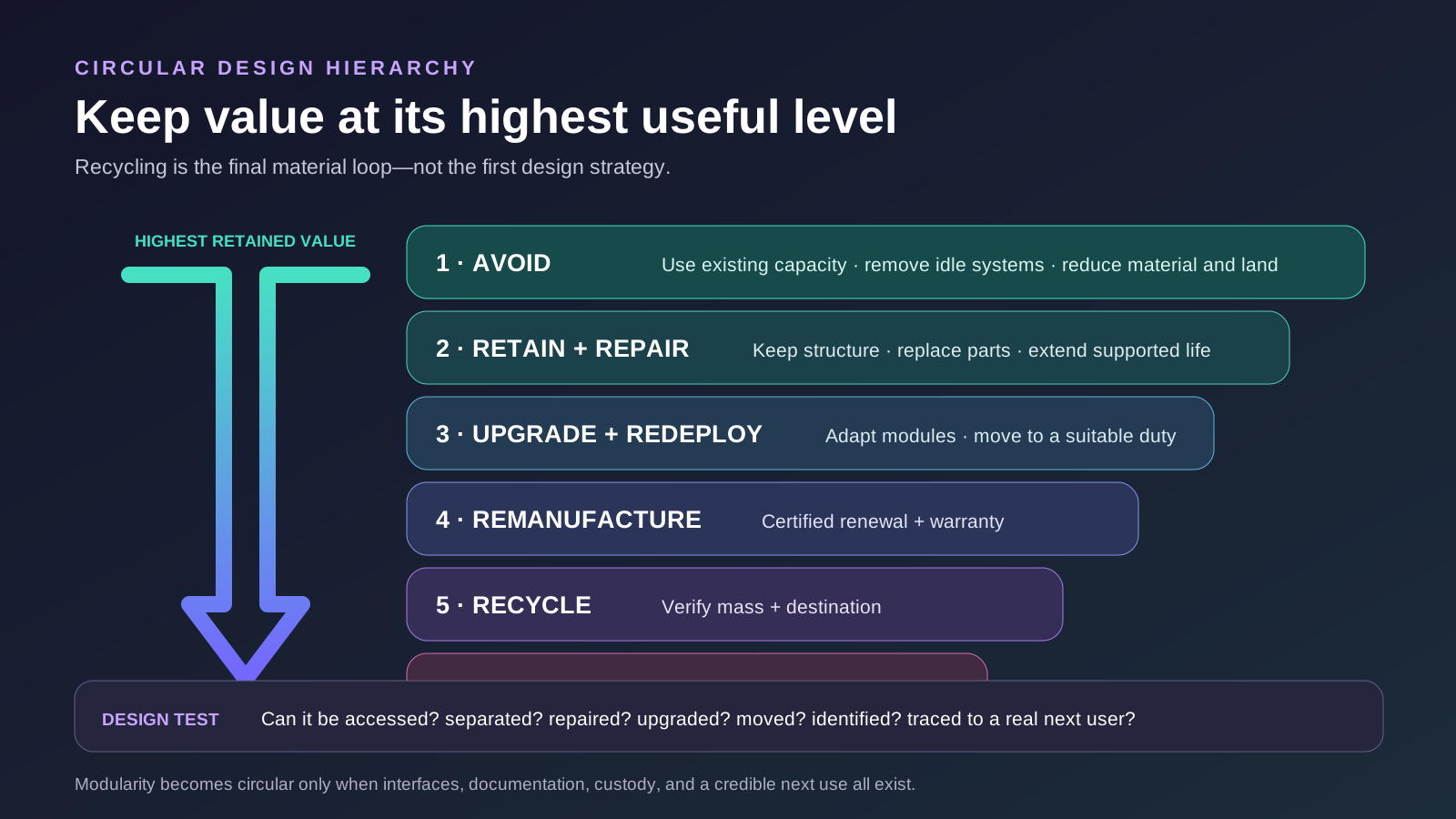
Circularity Decision Hierarchy
| Priority | Building and MEP action | Technology action | Proof required |
|---|---|---|---|
| 1 · Avoid | Use existing capacity; remove unnecessary material | Eliminate idle or duplicate equipment | Baseline and avoided quantity |
| 2 · Retain and repair | Keep structure; maintain replaceable parts | Repair and extend supported life | Condition, safety and service record |
| 3 · Upgrade and redeploy | Adapt modules and systems | Move to a suitable second workload | Compatibility and chain of custody |
| 4 · Remanufacture | Return assemblies for certified renewal | Restore equipment with warranty | Verified process and retained value |
| 5 · Recycle | Recover separated material | Recover metals and controlled components | Measured mass and final destination |
Control construction and commissioning carbon
Meter site electricity and fuels; log equipment hours, temporary generation, logistics, worker transport where material, water, waste, packaging, damaged products, rework, and commissioning loads. Use grid connection or cleaner temporary supply early where feasible, consolidate deliveries, protect installed work, and coordinate prefabrication against real dimensional tolerances. Separate prevention, direct reuse, return, recycling, recovery, and disposal by measured mass and verified destination. Do not call material diverted when its downstream fate is unknown. Reconcile installed quantities to procurement and the final model.
Close the ledger at as-built—and reopen it during operations
Produce an as-built whole-life assessment using actual quantities, products, transport, construction, refrigerant charge, and commissioned performance. Explain variance from budget and retain machine-readable asset and material records in the owner's information system. Update the forecast for expansions, efficiency projects, equipment failures, replacements, and grid change. At decommissioning, survey before demolition, isolate data-bearing equipment, identify hazardous materials, plan component harvest, and verify reuse and recycling custody. Report gross life-cycle impact separately from any claimed benefit beyond the system boundary.
Early screening checklist
What to verify before advancing this site.
- The assessment boundary includes structure, MEP, IT hardware, refrigerants, replacements, operations, and end of life
- A functionally equivalent baseline and stage-specific carbon budgets are approved
- Existing capacity, brownfield assets, and retained materials are tested before new build
- Structural quantities are reduced before lower-carbon products are substituted
- MEP manufacturing, efficiency, refrigerants, service life, and replacement are modeled
- Hardware refresh decisions include utilization, operational savings, embodied carbon, and custody
- Modules have accessible interfaces, replaceable parts, documentation, and a credible next use
- Procurement requires comparable product data, limits, uncertainty, and substitution control
- Construction energy, fuels, logistics, waste, rework, and final destinations are measured
- The as-built ledger is retained and updated through change, reuse, and decommissioning
What DCFR would flag
Risks surfaced at the screening stage.
DCFR would flag a low-carbon or circular claim based only on a few selected products, recycled-content percentages, or theoretical recyclability, without a comparable baseline, full system boundary, quantity ledger, replacement cycles, refrigerants, technology refresh, verified custody, and as-built reconciliation.
Professional confirmation required
Items requiring licensed validation.
Confirm life-cycle rules, study period, product data comparability, structural and fire requirements, refrigerant regulation, equipment service life, information-security controls, waste classification, take-back obligations, and environmental claims with the owner, designers, contractors, manufacturers, qualified life-cycle assessors, counsel, and assurance provider.
Final takeaway
The lowest-carbon data center is the one that avoids unnecessary capacity and material, retains value through technology change, and can prove every major life-cycle decision with quantities and custody records.
Screen up to 20 candidate sites before selecting one for the full DCFR report.
Each DCFR Report Package includes a preliminary 20-site comparison PDF / export package plus one selected planning-grade feasibility report.