
DCFR Insight 55 / Regenerative Infrastructure
Data Center Heat Reuse, Community Value, and Ecological Infrastructure
A data center creates local value only when recoverable heat reaches a real user, ecological gains survive construction, and community commitments are measured with the same discipline as electrical capacity.
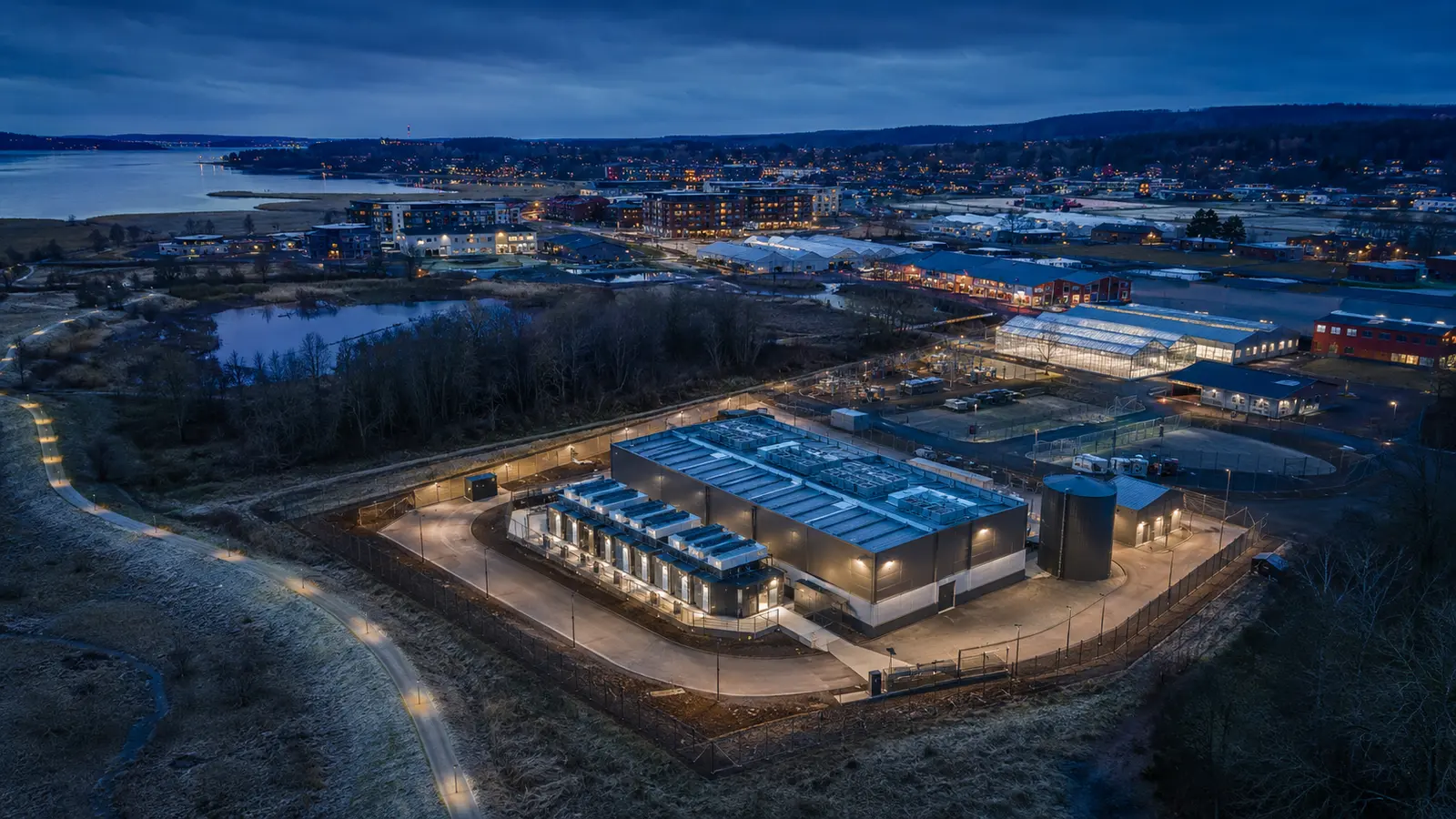
Measure the heat resource before announcing a heat project
Develop hourly profiles of recoverable thermal power, energy, supply and return temperature, flow, information-technology load, cooling mode, availability, and seasonal rejection. Distinguish gross rejected heat from heat technically recoverable at the defined interface and from useful heat actually delivered. Include pumps, heat exchangers, heat-pump electricity, thermal losses, backup supply, storage, maintenance, and parasitic cooling. Rack density and warm liquid cooling can improve heat quality, but no architecture creates a benefit until the energy serves a compatible demand.
Start with the offtaker's demand and service requirement
Map candidate district networks, buildings, industry, greenhouses, pools, laundries, food processes, aquaculture, or other lawful users by hourly and seasonal demand, temperature, distance, expansion, credit, and criticality. Validate connection timing, easements, internal conversion work, backup, tariff, ownership, and appetite for a long-term agreement. Compare the data center's minimum dependable output with the offtaker's coincident demand; annual energy totals can conceal a summer surplus and winter shortfall. A memorandum of interest or future-ready pipe is enabling evidence, not delivered heat.
Design a temperature cascade rather than one connection
Allocate the highest useful temperature to the most demanding compatible use, then pass lower-temperature return heat to successive users where the network allows. Position heat exchangers, heat pumps, storage, and backup so each party has a clear hydraulic and thermal boundary. Model fouling, water chemistry, pressure separation, minimum flow, frost, low-load operation, and simultaneous maintenance. A cascade can improve the share of useful heat, but added distribution and temperature lift must be justified by measured demand and lifecycle energy, carbon, water, cost, and reliability.
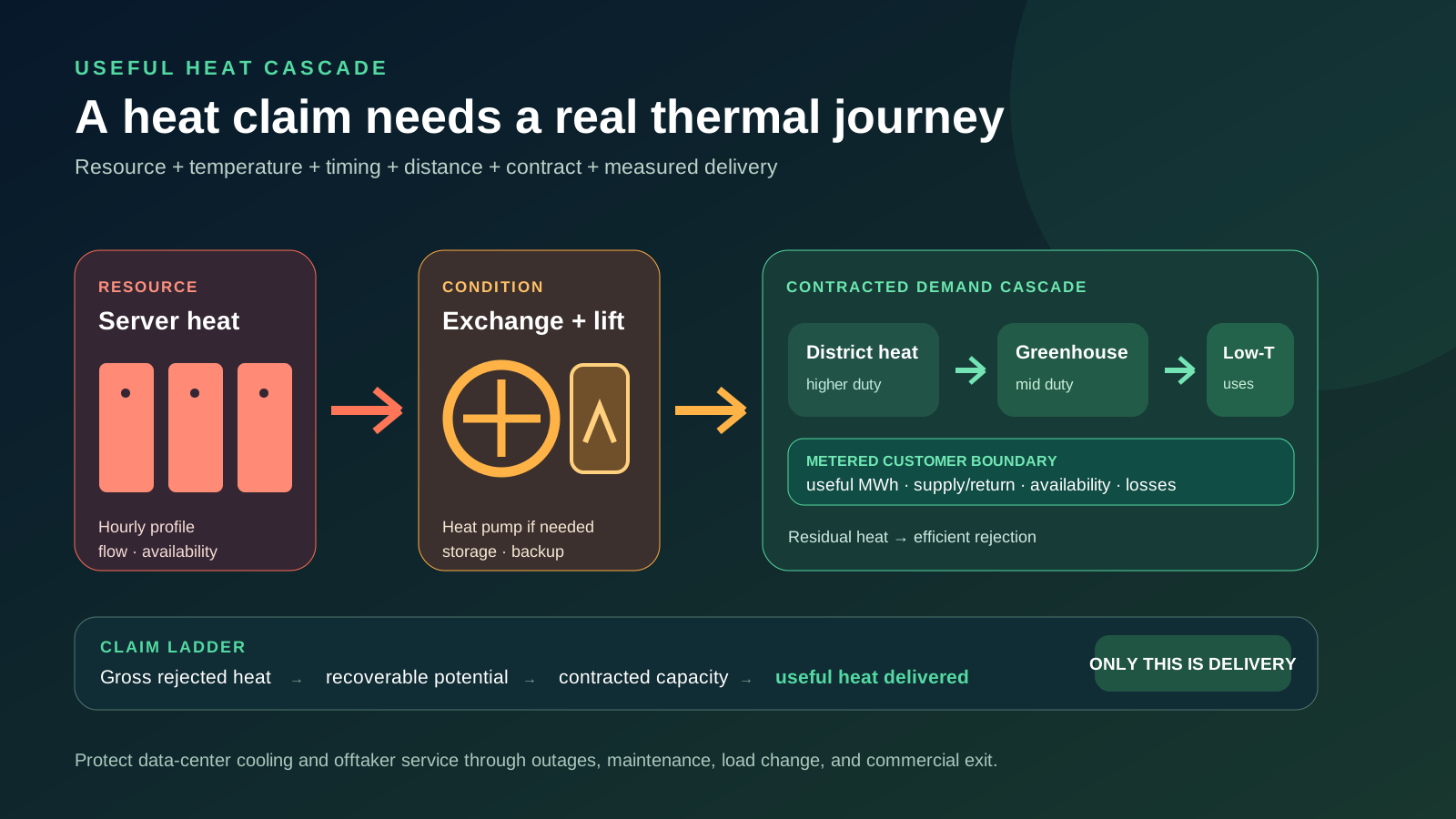
Allocate ownership and failure before construction
Define who finances, owns, operates, maintains, and replaces capture equipment, heat pumps, storage, network, meters, and customer interfaces. Contract minimum and maximum temperature, flow, availability, quality, forecast, outage notice, backup, tariff, indexation, expansion, curtailment, force majeure, performance data, carbon attributes, and remedies. Preserve the data center's cooling and information-technology service during an offtaker outage, and protect the offtaker during campus maintenance or load reduction. Include an orderly exit and stranded-asset allocation if either party changes strategy.
Use siting and phasing to make symbiosis feasible
Heat loses economic and environmental value with distance and temperature lift, so map users and planned district-energy corridors before site commitment. Coordinate road crossings, rights of way, utility conflicts, energy centers, thermal storage, and phase dates with local authorities and network owners. Preserve space and connection points for credible future expansion without reporting unconnected capacity as recovered heat. Where no viable offtaker exists, prioritize efficient heat rejection and avoid equipment whose only purpose is to support a marketing claim.
Heat-Reuse Feasibility Gate
| Gate | Evidence required | Release decision | Stop condition |
|---|---|---|---|
| Resource | Hourly heat, temperature, flow and availability | Begin market engagement | Only annual gross rejected heat is known |
| Demand | Coincident offtaker profile and service requirement | Select concept | Demand is seasonal or too remote without a viable solution |
| System | Hydraulics, heat pump, storage, backup and losses | Develop design | Lifecycle burden exceeds useful value |
| Commercial | Ownership, tariff, interfaces, easements and remedies | Authorize construction | No bankable offtake or stranded-asset allocation |
| Performance | Commissioned meters and useful delivered heat | Make external claim | Potential or capacity is reported as delivery |
Useful heat delivered is measured at the agreed customer boundary; gross server heat and future-ready capacity remain separate disclosures.
Establish the nature baseline before disturbance
Map habitat condition and connectivity, species, wetlands and watercourses, soil, groundwater, canopy, invasive species, carbon-rich land, seasonal use, night conditions, and cultural or community significance across the site and an ecologically meaningful area of influence. Apply avoid, minimize, restore, and only then compensate. Compare previously disturbed land and compact development before greenfield expansion. Set measurable reference condition, target condition, area, quality, connectivity, time horizon, permanence, and responsible party; an increase in planted area alone does not demonstrate biodiversity gain.
Make civil infrastructure perform ecological work
Use grading, soil conservation, native planting, shade, permeable surfaces, bioswales, detention, wetland treatment, habitat corridors, dark-sky lighting, bird-safe design, and low-impact maintenance to manage runoff, heat, noise, and habitat together. Test flood exceedance, erosion, sediment, thermal pollution, deicing or fire-water contamination, drought establishment, and invasive-species control. Keep critical electrical systems resilient while allowing noncritical landscape systems to flood or store water safely. Commission living systems over seasons and fund maintenance beyond practical completion.
Map cumulative community burden before offering benefits
Assess grid and water constraints, generator emissions, noise, traffic, land and housing pressure, views, light, construction duration, emergency services, taxation, employment access, supply-chain opportunity, and displacement in combination with existing local burdens. Identify affected groups, not only jurisdiction-wide averages, and publish understandable scenarios for initial, committed, and ultimate capacity. Engagement should begin while alternatives remain open. Record issues, design responses, unresolved disagreement, and decision ownership; consultation volume is not evidence of consent or equitable outcome.
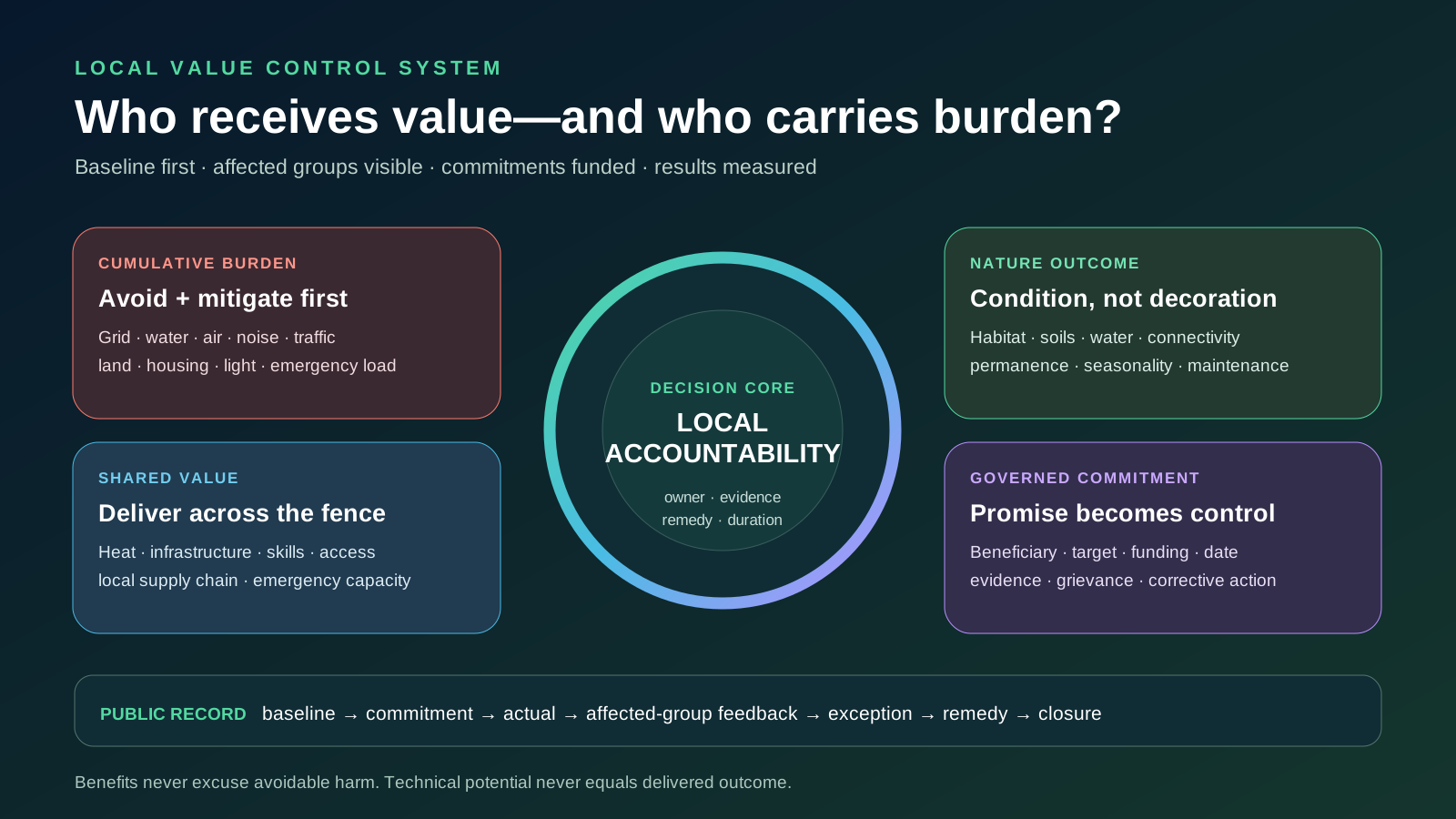
Turn community promises into governed commitments
Define specific outcomes for apprenticeships, local procurement, education, shared energy or water infrastructure, emergency capability, public realm, conservation, tax transparency, heat access, or other locally selected priorities. For each commitment, state beneficiary, baseline, target, funding, delivery date, duration, responsible party, evidence, grievance route, remedy, and change control. Avoid trading essential mitigation for discretionary benefit or counting ordinary permit compliance as generosity. Establish accessible reporting and an independent mechanism for material disputes.
Commission local value and report actual delivery
Meter heat at the agreed delivery and return boundaries; report useful energy, temperature, availability, losses, heat-pump electricity, backup, rejected heat, and carbon method. Inspect ecological targets at appropriate seasons using the agreed baseline and condition method. Track community impacts and commitments through construction and operation, with complaints, response time, corrective action, and closure. Separate operational delivery from technical potential, signed intent, and investment. Rebaseline transparently when campus load, ownership, offtaker demand, climate, or surrounding development changes.
Local Value Commitment Register
| Domain | Commitment basis | Operating evidence | Red flag |
|---|---|---|---|
| Community burden | Affected-group baseline and cumulative scenario | Noise, air, traffic, water and complaint records | Benefits are used to excuse unmitigated harm |
| Employment and procurement | Accessible roles, training, spend and duration | Verified outcomes by agreed geography and group | Construction peaks are presented as permanent jobs |
| Shared infrastructure | Capacity, access, funding and service agreement | Availability, beneficiaries and lifecycle cost | Infrastructure exists only inside the fence |
| Nature | Condition, area, connectivity and permanence target | Seasonal surveys and maintenance actions | Tree count substitutes for ecological condition |
| Heat reuse | Contracted user and delivery boundary | Metered useful heat and service quality | A connection stub is called recovered energy |
Early screening checklist
What to verify before advancing this site.
- Recoverable heat is profiled by hour, temperature, flow, availability, and cooling mode
- The offtaker has validated coincident demand, connection work, credit, and service needs
- Heat pumps, storage, backup, network losses, and lifecycle impacts are modeled
- Ownership, tariff, outage, carbon attributes, change, remedies, and exit are contracted
- Siting and phasing protect viable corridors and do not overstate future readiness
- The ecological baseline covers condition, connectivity, seasonality, and area of influence
- Avoid, minimize, restore, and compensate are applied in that order
- Cumulative burdens are mapped for affected groups before benefit commitments are selected
- Every community and nature commitment has funding, evidence, remedy, and duration
- Public reporting distinguishes potential, contracted capacity, and measured delivery
What DCFR would flag
Risks surfaced at the screening stage.
DCFR would flag regenerative, heat-reuse, nature-positive, or community-benefit claims based on technical potential, tree counts, consultation activity, or nonbinding intent, without a real offtaker, measured useful delivery, ecological reference condition, cumulative-burden assessment, governed commitments, remedies, and long-term verification.
Professional confirmation required
Items requiring licensed validation.
Confirm heat-network regulation, metering and tariff rules, property rights, utility interfaces, hydraulic safety, planning and ecological requirements, affected communities, benefit governance, tax treatment, environmental claims, and assurance with the owner, offtakers, local authorities, utilities, qualified engineers and ecologists, community representatives, counsel, and assurance provider.
Final takeaway
A data center becomes local infrastructure only when heat, land, investment, and accountability cross the fence as durable, measured value—not when technical possibility is converted into a headline.
Screen up to 20 candidate sites before selecting one for the full DCFR report.
Each DCFR Report Package includes a preliminary 20-site comparison PDF / export package plus one selected planning-grade feasibility report.