
DCFR Insight 63 / Delivery + Governance
Data Center Development Sequence: Site Control to Operations
A data center is not one linear project. It is a synchronized program of land, power, approvals, design, procurement, construction, commissioning, and operations—each with a different clock, evidence threshold, and point of no return.
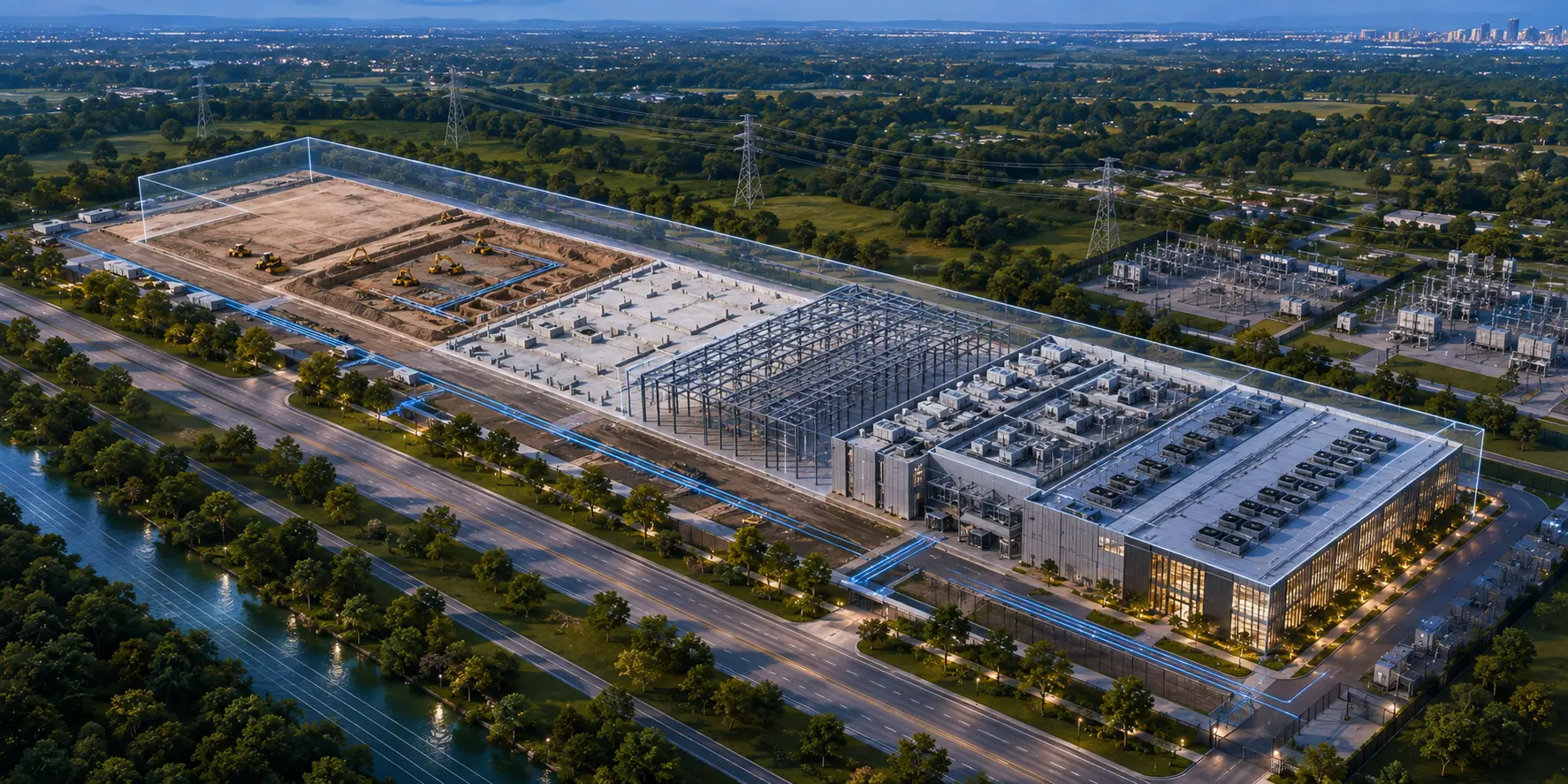
Run one program, not eight disconnected schedules
The development schedule should connect site control, utility capacity, off-site infrastructure, entitlements, environmental work, design, long-lead procurement, construction, commissioning, and operational readiness in one logic network. Separate team schedules are useful working documents, but they cannot answer the owner’s central question: what condition must be true before the next irreversible commitment? The program schedule needs explicit predecessors, decision dates, external dependencies, float ownership, and recovery actions. Power delivery is often prominent, but land rights, agency approvals, equipment manufacturing, fiber, water, road access, and staffing can independently govern beneficial use.
Sequence the development through eight evidence gates
A strong sequence is decision-based rather than percentage-complete-based. Each gate ends with an owner decision supported by specific evidence.
01 — Strategy and demand
Define the customer, capacity blocks, density, resilience, delivery dates, geography, commercial boundary, and expansion logic.
02 — Site control
Secure enough time and access to complete diligence, obtain utility information, advance approvals, and exit if fatal conditions remain.
03 — Feasibility
Test title, survey, geotechnical, environmental, flood, water, power, fiber, access, zoning, community, constructability, cost, and schedule on one common basis.
04 — Commitment
Convert indicative statements into documented capacity, rights, responsibilities, milestone dates, securities, remedies, and approval pathways.
05 — Definition
Freeze the Owner’s Project Requirements, Basis of Design, campus plan, phasing, utility boundary, commissioning strategy, and control estimate.
06 — Mobilization
Release enabling work and long-lead equipment only against approved packages, interfaces, design maturity, and change authority.
07 — Build and prove
Execute work packages, preserve energization logic, close quality records, commission systems, and demonstrate integrated performance.
08 — Operate and learn
Transfer configuration, training, maintenance, spares, warranties, test evidence, and lessons into the operating organization and next site.
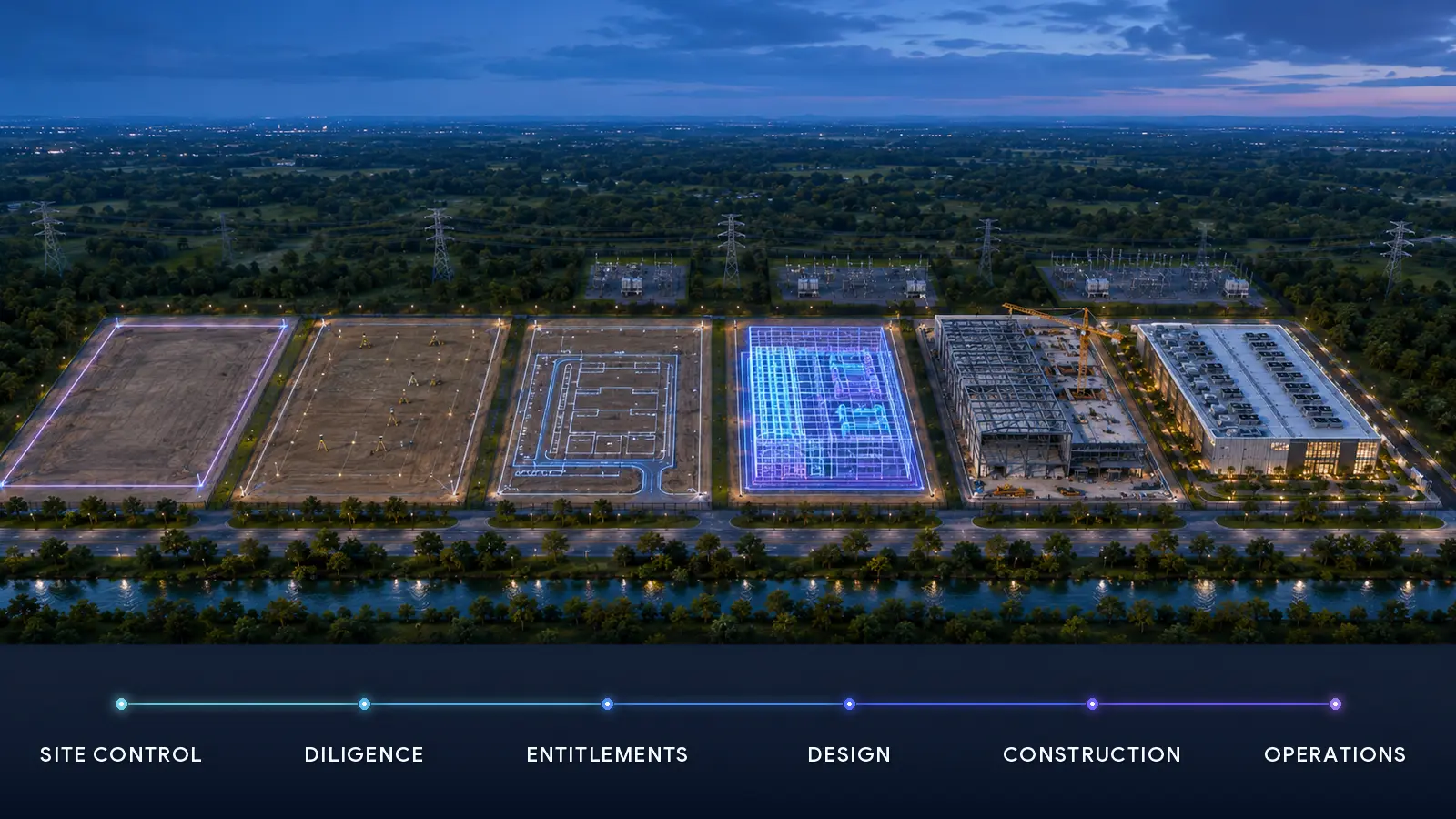
Protect optionality before certainty exists
Early speed should come from buying information and preserving options, not from pretending uncertainty has disappeared. Site-control periods should cover diligence and utility study timelines. Early design should establish no-regret corridors, grades, security, drainage, utility yards, and expansion zones without overcommitting the building. Procurement should distinguish reservation, engineering release, manufacturing release, shipment, and acceptance. Every early release needs a cancellation position, storage plan, ownership of design change, compatibility rule, and quantified consequence if the project moves or stops.
Make external commitments executable
A project cannot schedule a hope. Utility service, transmission upgrades, road work, water capacity, wastewater acceptance, permits, easements, and third-party fiber need a named counterparty, scope, capacity, location, sequence, review period, payment milestone, completion test, and remedy. The master schedule should distinguish owner-controlled work, jointly controlled work, and third-party work. High-risk external milestones should carry leading indicators—study complete, design accepted, land acquired, equipment ordered, outage approved—not only a distant promised date.
Govern the gates with a single decision record
Each gate should issue one short decision record: what was approved, the evidence relied on, remaining assumptions, accepted risks, conditions to proceed, accountable owners, and the date the decision expires. This prevents old assumptions from surviving through copied presentations. It also creates a clean investment trail for lenders, insurers, joint-venture partners, customers, and future operators. Gate approval is not a ceremonial meeting; it is the point at which exposure changes and authority is deliberately released.
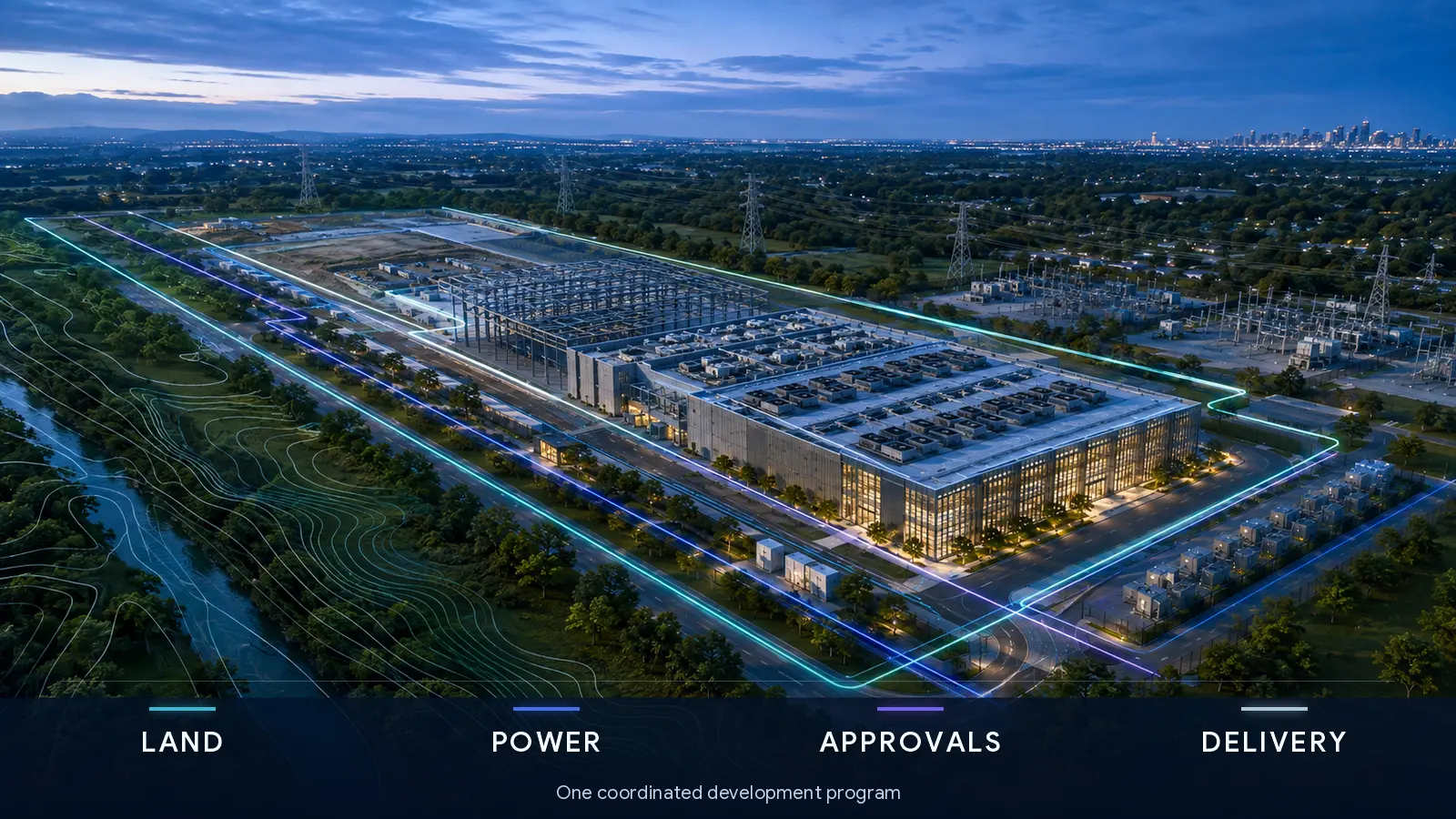
Owner gate evidence
| Gate | Minimum evidence | Decision |
|---|---|---|
| Site control | Rights, access, diligence plan, utility request, exit terms | Fund diligence |
| Feasibility | Fatal-flaw log, concept, capacity path, approval path, range estimate | Advance or exit |
| Commitment | Executable land and utility positions, risk-adjusted schedule, control budget | Acquire and authorize |
| Definition | OPR, BOD, phasing, interface matrix, commissioning plan | Freeze program baseline |
| Release | Package maturity, long-lead terms, change rules, cash curve | Release capital |
| Acceptance | Test records, training, asset data, permits, open-item limits | Transfer to operations |
Evidence requirements should be tailored to jurisdiction, delivery model, financing, customer contract, and the owner’s risk tolerance.
Plan backward from operational acceptance
Commercial operation is not achieved when construction looks complete. Work backward from the performance that the customer and operator must accept: available utility source, commissioned backup generation, stable control sequences, verified cooling at load, life-safety approval, security turnover, network readiness, trained staff, spares, maintenance procedures, asset data, and closed material defects. This reverse plan exposes late dependencies early and keeps temporary conditions from quietly becoming the operating design.
Early screening checklist
What to verify before advancing this site.
- One integrated logic schedule connects land, power, approvals, design, procurement, construction, commissioning, and operations
- Every gate has required evidence, an accountable approver, conditions to proceed, and an expiration date
- Site-control duration covers diligence, utility studies, approvals, negotiation, and exit rights
- External milestones name the counterparty, scope, capacity, location, acceptance test, and remedy
- Early equipment releases separate reservation, engineering, manufacture, shipment, storage, and acceptance
- The operational acceptance plan is built backward into design and construction packages
What DCFR would flag
Risks surfaced at the screening stage.
DCFR would flag a development plan that shows a single completion date but no evidence gates, no external-interface owners, no distinction between indicative and executable commitments, and no backward plan from operational acceptance.
Professional confirmation required
Items requiring licensed validation.
Confirm land rights, utility service, transmission scope, entitlements, environmental approvals, design basis, contracting strategy, procurement releases, construction sequencing, commissioning, safety, operations readiness, financing conditions, insurance, and customer acceptance with the owner, counsel, serving utilities, authorities, licensed engineers, contractors, commissioning authority, operator, insurer, lender, and customer.
Final takeaway
The fastest credible development sequence is the one that releases each commitment only when the evidence is strong enough—and keeps every workstream synchronized to operational acceptance.
Screen up to 20 candidate sites before selecting one for the full DCFR report.
Each DCFR Report Package includes a preliminary 20-site comparison PDF / export package plus one selected planning-grade feasibility report.