
DCFR Insight 59 / Schedule + Critical Path
How Long Does a Data Center Really Take?
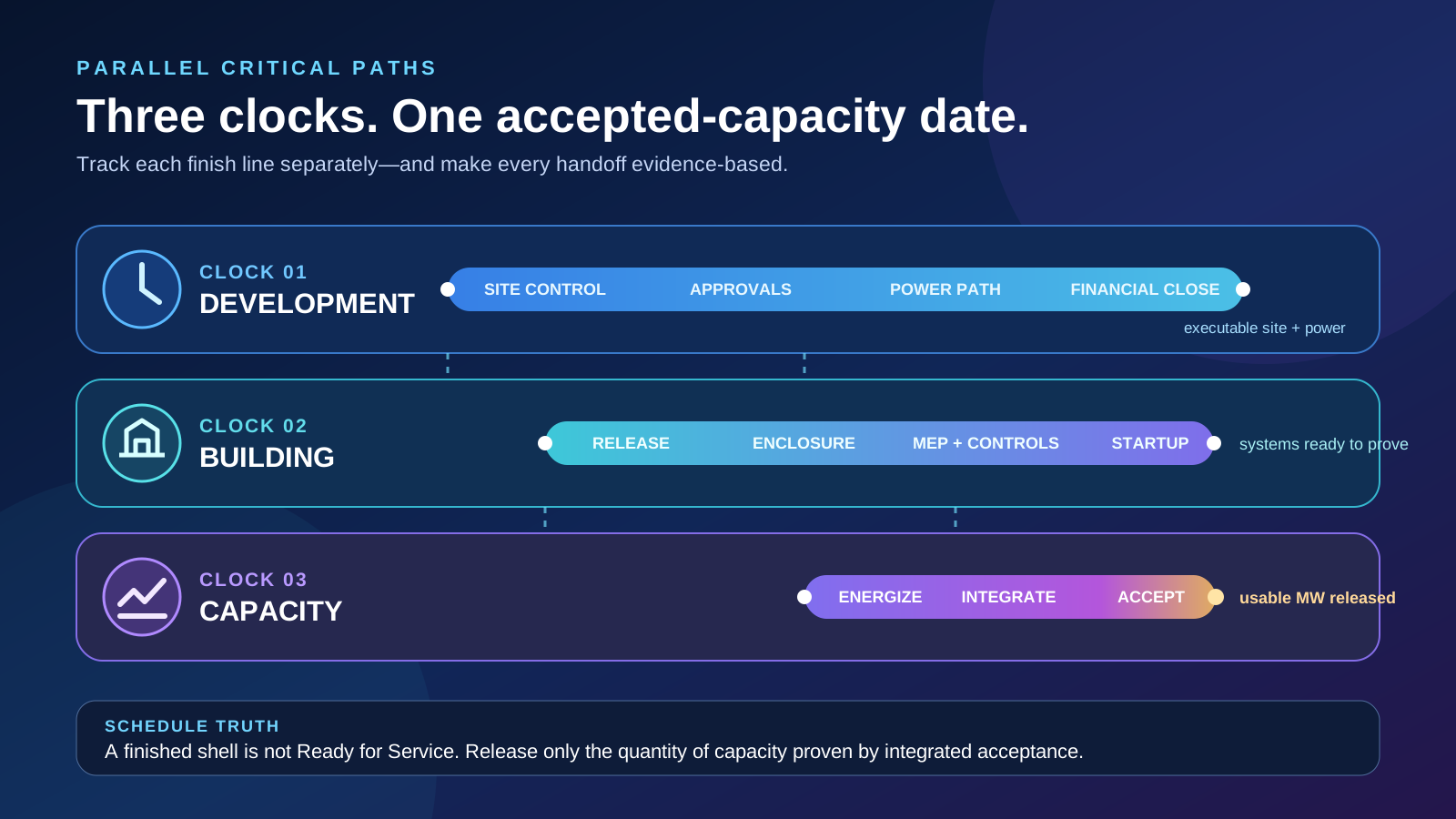
There is no single data-center duration. Owners must control three overlapping clocks—the development clock, the building clock, and the capacity clock—and distinguish first usable megawatts from ultimate campus buildout.

Ask which clock—and which finish line
A statement that a data center takes 12, 24, or 60 months is incomplete until its clock and finish line are defined. The development clock begins with demand, site control, utility feasibility, land-use strategy, environmental work, and commercial approvals. The building clock begins only when a sufficiently stable design, workfront, procurement plan, and notice to proceed exist. The capacity clock ends when contracted information-technology load is energized, cooled, connected, tested, documented, staffed, and accepted for its intended workload. Track first Ready for Service, each released capacity block, committed capacity, and ultimate master-plan capacity separately.
Define the capacity product before measuring time
State the promised output: gross building megawatts, utility import, generator-backed critical load, commissioned information-technology load, rack-ready capacity, or productive compute. Define redundancy, density, cooling medium and temperatures, network readiness, commissioning standard, reliability demonstration, customer acceptance, and exclusions. Tie the schedule to capacity blocks with explicit quantities and evidence. Otherwise a team can report the shell complete, utility energized, or equipment started while substantial work remains before the owner can safely carry customer load. Schedule comparison is meaningful only when the delivered products and acceptance thresholds match.
Start the development clock before design mobilization
The first work is often invisible on a construction photograph: demand validation, confidentiality, site search, title and access, utility studies, network strategy, survey, geotechnical and environmental investigation, water and wastewater, land-use approval, community engagement, and development agreements. Map the earliest date each decision can be made, the evidence required, and the last responsible date for land or capital commitment. A short contractor programme cannot recover time already consumed by a speculative power promise, contested entitlement, unavailable utility corridor, or site whose ultimate capacity was never physically tested.
Manage power delivery as its own integrated programme
Separate on-site electrical construction from generation, transmission, network reinforcement, substation, interconnection, protection, telemetry, easements, land, permits, outage windows, equipment, testing, and commercial service agreements controlled by other parties. Give every utility milestone an accountable owner, required predecessor, confidence class, and evidence date. JLL reports that average grid-connection waits in primary markets exceed four years, while CBRE notes that new transmission or generation for very large campuses can add 24, 36, 48 months or more. Those activities may overlap design and construction; they should not simply be added as one generic delay allowance.
Build the building clock from releaseable work packages
Release enabling works, earthwork, underground utilities, foundations, structure, enclosure, electrical rooms, cooling plant, data halls, controls, and fit-out only when their inputs are stable enough for the risk being taken. Connect 30%, 60%, 90%, issued-for-construction, fabrication, and field-release milestones to decision content rather than calendar labels. Track long-lead transformers, switchgear, generators, UPS systems, batteries, chillers or dry coolers, pumps, controls, and network equipment from technical selection through approved submittal, manufacturing slot, witness test, delivery, preservation, installation, startup, and spare-parts readiness. Apparent acceleration created by premature release frequently returns as rework and interface delay.
Illustrative Capacity-Delivery Scenarios
| Scenario basis | Planning window to first RFS | Ultimate-capacity treatment | Likely controlling path |
|---|---|---|---|
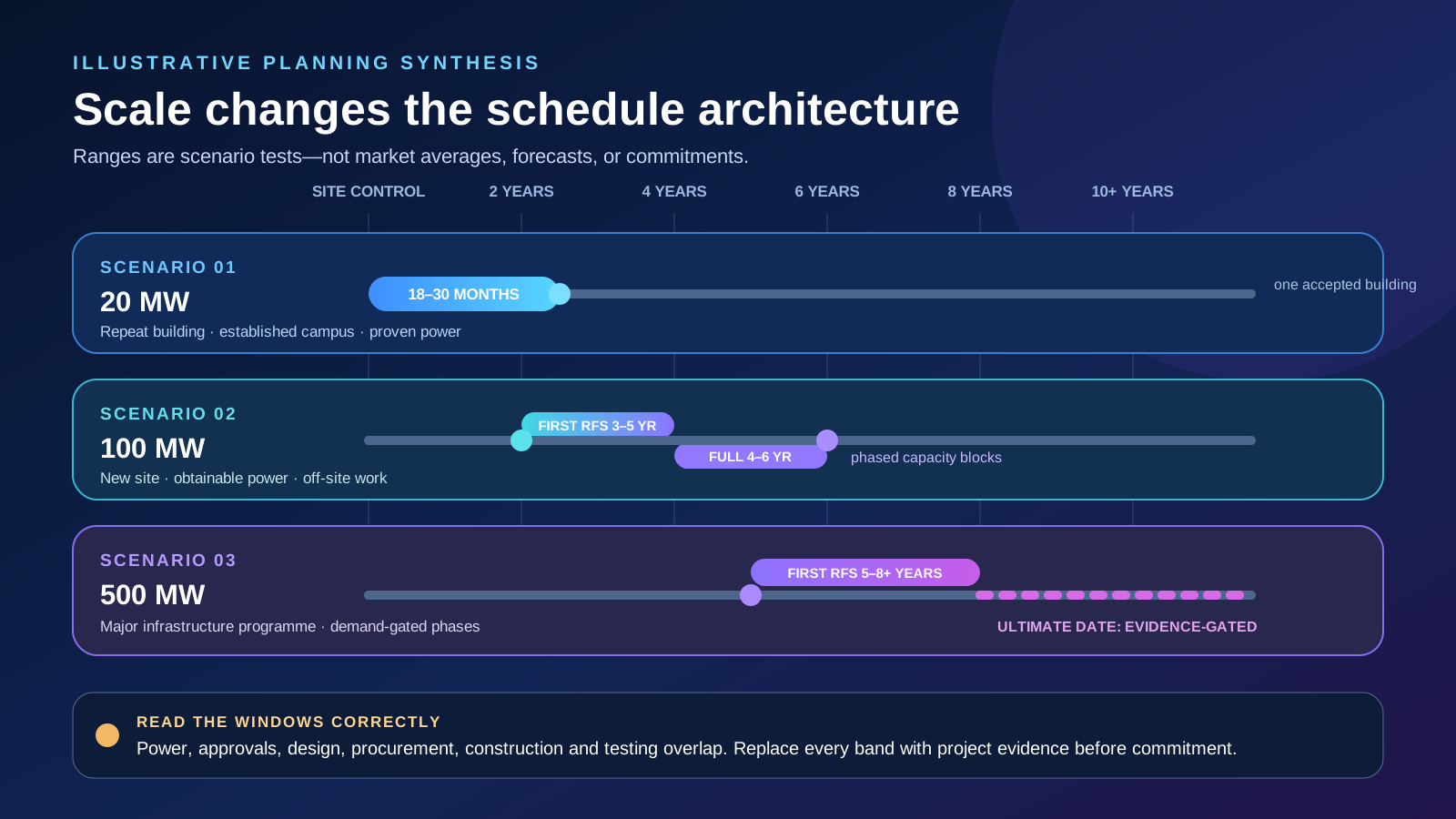
| 20 MW repeat building on an established, entitled and powered campus | 18–30 months from controlled release | Full 20 MW accepted within the same building programme | Equipment release, enclosure, integration and commissioning |
| 100 MW new multi-building campus with obtainable power and material off-site work | 36–60 months from site control | Illustrative 48–72 months to full committed capacity | Utility scope, entitlement, permanent backbone and phase interfaces |
| 500 MW campus requiring major transmission or generation | 60–96+ months from site control | Gated programme; do not force ultimate 500 MW into one unsupported date | Generation or transmission, land and approvals, staged infrastructure and demand releases |
DCFR illustrative planning synthesis—not market averages, forecasts, or contractual commitments. Windows assume disciplined overlap and must be replaced with a project-specific risk schedule. Utility work overlaps rather than simply adds to the building programme.
Design concurrency instead of merely compressing dates
Schedule advantage comes from compatible work proceeding in parallel: site diligence with utility studies, early design with procurement strategy, factory fabrication with foundations, and later-building design with first-building construction. Each overlap needs a frozen interface, assumption register, change authority, tolerance, and recovery plan. Protect future roads, substation bays, pipe and cable routes, laydown, cranes, testing zones, and safe separation from live operations. Float belongs at the uncertainty that creates it; hiding all contingency at the end makes the critical path look shorter while leaving the programme unable to absorb normal discovery.
Make the capacity clock visible from the beginning
Commissioning is a continuous verification process, not a ceremony after construction. Develop the owner project requirements, basis of design, commissioning plan, systems manual, test scripts, turnover packages, seasonal tests, and issue workflow while the systems are still changeable. Sequence utility energization, protection testing, cleaning and flushing, equipment startup, controls point-to-point checks, functional performance tests, network and cybersecurity readiness, integrated systems testing, reliability demonstration, training, spares, and operating acceptance. Preserve time for correction and retest. Mechanical completion is an input to the capacity clock—not its finish line.
Use the 20 MW scenario to test repeatable delivery
For an illustrative 20 MW building on an established, entitled campus with a proven high-voltage path and repeatable design, test an 18–30-month window from controlled release to accepted full capacity. That range is not an industry average: Virginia's JLARC reports that an individual data-center building usually takes 12–18 months to construct, and NTT's 24 MW VA6 reached first-phase substantial completion in about 15 months before later critical capacity continued into the following year. Operator case studies under six or ten months show what special existing-market conditions can achieve, not a baseline to impose on every project.
Use the 100 MW scenario to expose campus interfaces
For an illustrative new 100 MW multi-building campus with obtainable utility capacity but meaningful off-site, entitlement, and backbone work, test first Ready for Service at 36–60 months and full committed capacity at 48–72 months from site control. Treat those windows as a planning synthesis. Phase by usable capacity block, not shell count, and identify which central systems must be complete before the first block can operate. A first building may start while later substations, cooling trains, water systems, roads, and buildings advance, but shared controls, fire access, fiber, commissioning resources, and live-site constraints can couple the phases unexpectedly.
Milestones That Deserve Evidence
| Milestone | Minimum release evidence | False-positive version | Schedule response |
|---|---|---|---|
| Power secured | Executed path, quantity, date, scope, dependencies and remedies | Capacity discussed or reserved without deliverable network work | Carry probability bands and protect alternatives |
| Design released | Approved inputs, interfaces, change authority and constructability review | Drawing percentage without decision maturity | Release bounded packages and retain interface contingency |
| Equipment on track | Approved submittal, factory slot, test plan, logistics and recovery | Purchase order issued | Track every gate to installed and tested condition |
| Building complete | Safe, weather-tight, code-compliant systems ready for functional test | Shell topped out or major equipment set | Keep commissioning and corrective-work float visible |
| Ready for Service | Energized, cooled, connected, integrated, documented, staffed and accepted load | Utility meter live or first servers delivered | Release only the capacity proven by acceptance evidence |
Milestones should release decisions and capacity only when their evidence is complete; percentage-complete reporting cannot substitute for acceptance criteria.
Treat 500 MW as a capacity programme, not one giant project
For an illustrative 500 MW campus requiring major transmission or generation, test a 60–96+ month window to first accepted capacity and manage ultimate 500 MW buildout as a gated, demand- and grid-phased programme rather than promising one universal completion date. CBRE explicitly cautions that the former 12–18-month sub-50 MW model does not translate to 500 MW-plus AI campuses. Public examples reinforce the distinction: large campuses announce a site, later open an initial phase, and continue releasing buildings and power blocks over years. The executive schedule should therefore show probability-banded power dates, first capacity, annual release cadence, maximum concurrent work, and conditions for each later phase.
Early screening checklist
What to verify before advancing this site.
- Development, building, and capacity clocks are shown separately on one integrated schedule
- Every duration states its start event, finish event, capacity quantity, scope, and confidence basis
- First Ready for Service, each capacity block, committed capacity, and ultimate campus capacity have distinct dates
- Utility milestones cover generation or supply, transmission, substation, easements, equipment, protection, testing, and agreement
- Land, entitlement, environmental, community, water, fiber, and off-site infrastructure paths have accountable owners
- Design and procurement releases are tied to stable inputs, controlled interfaces, and explicit change authority
- Long-lead equipment is tracked from selection and factory slot through installation, startup, and accepted test
- Concurrent work protects future corridors, live operations, safety, access, testing zones, and corrective-work space
- Commissioning begins with requirements and design review and includes correction, retest, training, and documentation
- Schedule risk is probability-banded and float sits beside the uncertainty that may consume it
- Scenario ranges are identified as planning synthesis and replaced by project-specific evidence before commitment
- Executive reporting measures accepted usable capacity—not drawings, spend, shell completion, or equipment arrival
What DCFR would flag
Risks surfaced at the screening stage.
DCFR would flag a schedule that begins at construction notice to proceed, ends at shell completion, treats a utility target as secured power, presents first-phase progress as ultimate campus delivery, or claims a 20 MW precedent proves a 500 MW programme without probability-banded external infrastructure and acceptance paths.
Professional confirmation required
Items requiring licensed validation.
Confirm demand releases, site control, entitlement, environmental review, utility studies and agreements, generation and transmission scope, equipment lead times, design gates, permitting, labor, logistics, network readiness, commissioning, operating acceptance, customer obligations, float, and remedies with the owner, utility and grid operator, licensed professionals, authorities, contractors, suppliers, commissioning provider, operator, customers, insurers, counsel, and financiers.
Final takeaway
A data center is finished on three different clocks; the only schedule that matters commercially is the one that converts a controlled site and building into tested, accepted capacity at a stated quantity and confidence level.
Screen up to 20 candidate sites before selecting one for the full DCFR report.
Each DCFR Report Package includes a preliminary 20-site comparison PDF / export package plus one selected planning-grade feasibility report.