
DCFR Insight 49 / Brownfield Transformation
Converting Industrial Brownfields into Data Center Campuses
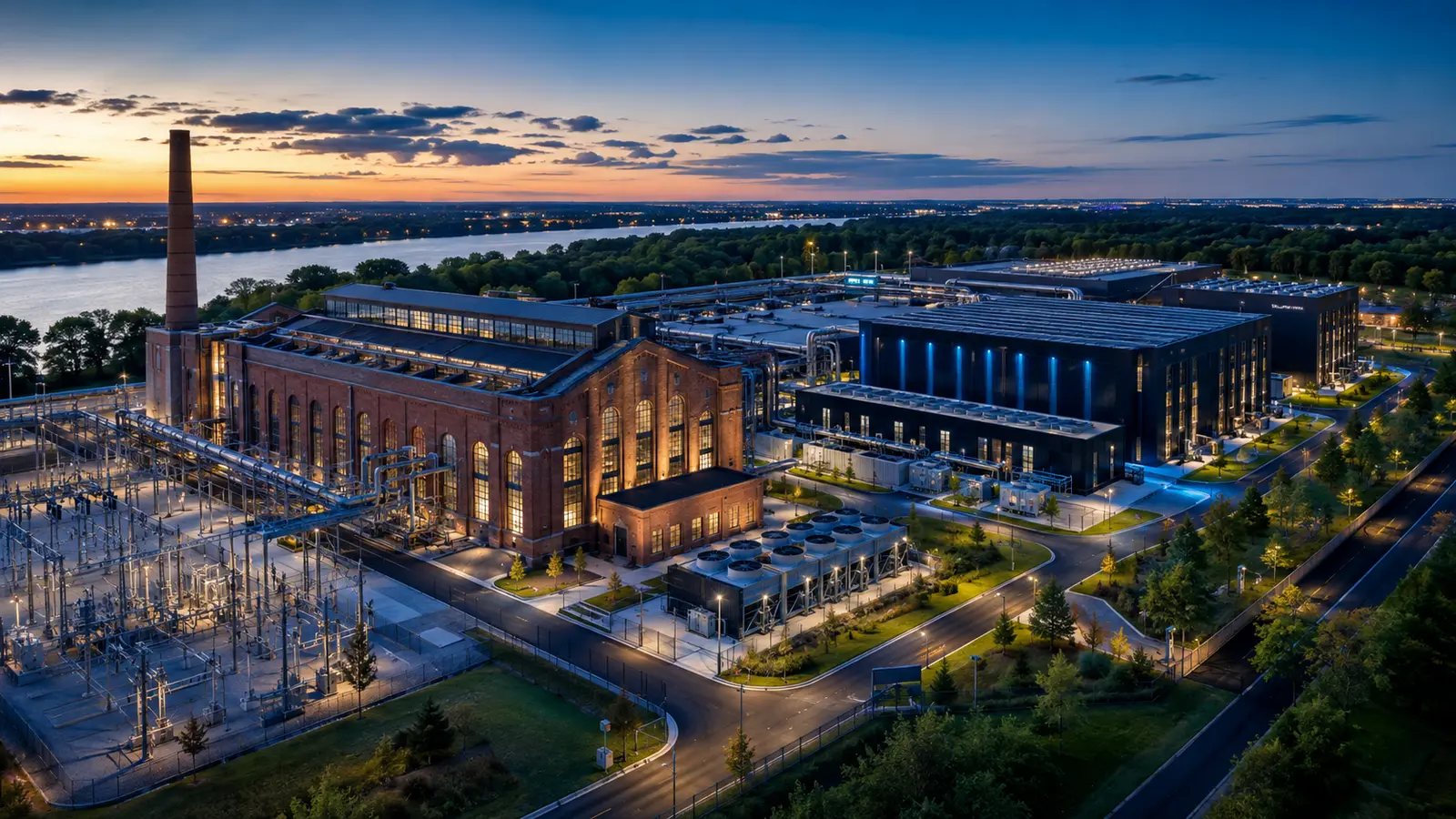
A former power station, factory, or logistics site can offer grid access, structure, water, transport, and community value—but only a disciplined evidence process can separate reusable advantage from inherited liability.
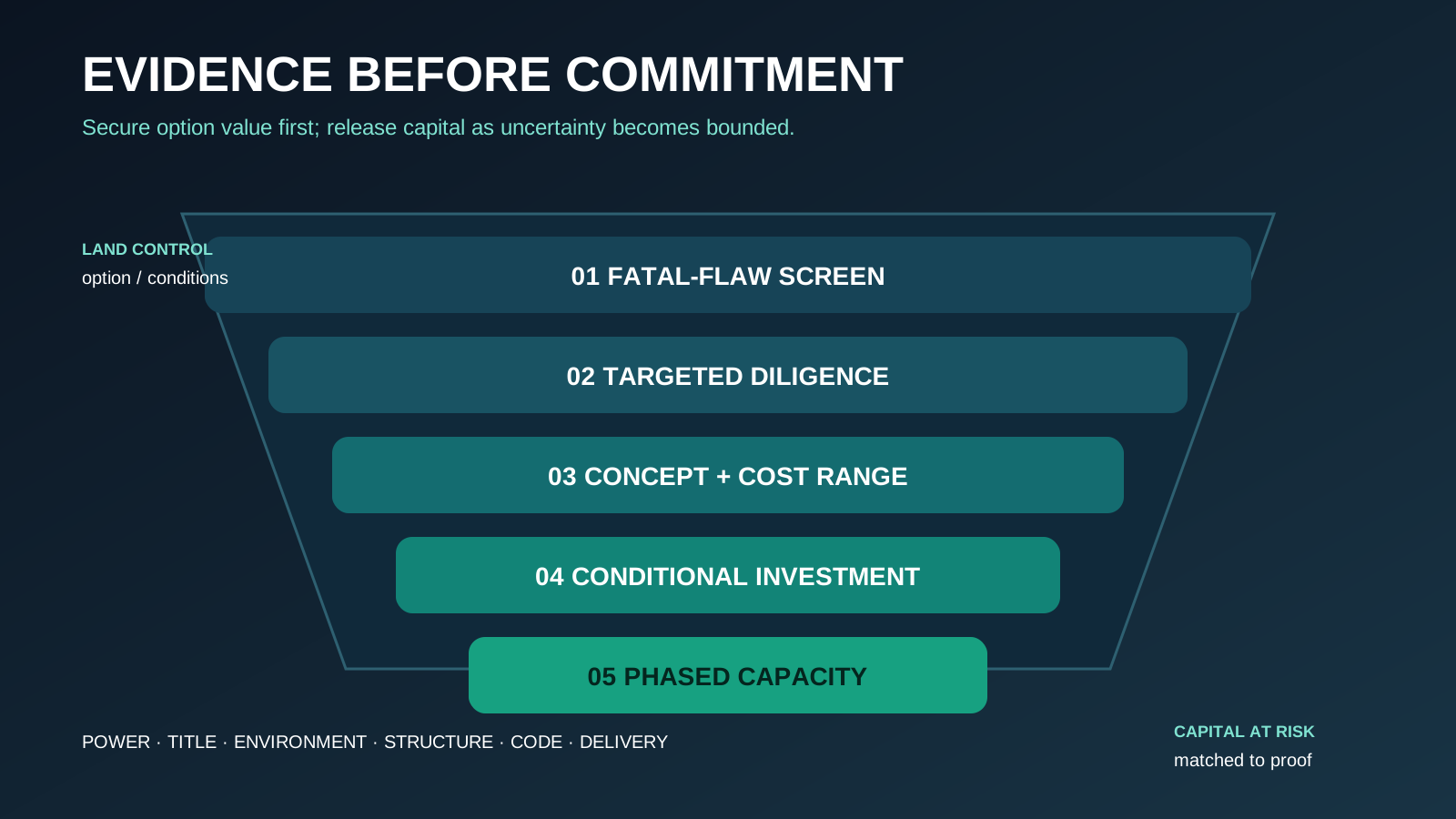
Buy option value before buying the whole problem
Use staged control—confidentiality, access agreement, exclusivity, option, or conditional acquisition—while fatal flaws are tested. Establish the intended initial and ultimate compute capacity, schedule, density, water and power strategy, and operating model. Build one data room for title, surveys, easements, environmental records, utility history, structures, hazardous materials, permits, incident history, and decommissioned assets. Tie deposits, closing, and price adjustments to objective evidence rather than a general belief that an industrial site must already be infrastructure-ready.
Run six diligence tracks against one common site model
Advance power, environmental, geotechnical, structural, planning and code, and constructability-logistics work in parallel. Map every finding spatially and assign confidence, owner, consequence, next test, and decision date. Examples include energized and abandoned circuits, contamination plumes, fill, buried foundations, flood routes, protected habitat, weak floor zones, heritage fabric, demolition boundaries, traffic constraints, and utility corridors. The value comes from intersections: a reusable building is not valuable if it blocks the only viable substation or remediation path.
Re-prove the power advantage from the utility outward
An existing switchyard or transmission line does not equal available data-center capacity. Confirm ownership, voltage, condition, fault duty, protection, firm capacity, study status, network upgrades, reliability, power quality, metering, tariff, easements, decommissioning obligations, and expansion route. Distinguish physical assets from contractual rights. Model temporary and permanent supply, phased energization, on-site resources, and the outage required to modify live infrastructure. Base acquisition gates on written utility evidence and a dated connection plan.
Brownfield Fatal-Flaw Screen
| Track | Early question | Evidence gate | Typical hidden liability |
|---|---|---|---|
| Power | Is capacity contractually and technically obtainable? | Written utility path, studies, upgrades and dates | Visible infrastructure has no available capacity or rights |
| Environment | Can contamination be bounded and managed? | Targeted investigation and regulator strategy | Plume, vapor or demolition scope expands |
| Ground and structure | Can assets carry the new campus safely? | Survey, testing and concept load paths | Buried obstructions, weak floors or corrosion |
| Planning and code | Is the proposed use and ultimate scale approvable? | Conversion matrix and authority engagement | Legacy status triggers modern upgrades |
| Delivery | Can Phase 1 be built without blocking remediation or expansion? | Integrated logistics and phasing plan | Temporary works consume the only viable corridor |
Convert environmental uncertainty into a bounded work package
Complete appropriate environmental due diligence and targeted investigation under applicable law. Characterize soil, groundwater, vapor, tanks, process chemicals, asbestos or other regulated materials, cooling-water systems, outfalls, and demolition waste. Define who is responsible for known and unknown conditions, regulator engagement, cleanup standard, land-use controls, monitoring, insurance, indemnities, schedule contingency, and long-term stewardship. Coordinate remediation with grading, foundations, utilities, and stormwater so clean work is not repeated or recontaminated.
Test existing structures for the new load path and service model
Survey geometry and condition, then verify foundations, frame, floors, roof, envelope, corrosion, fire resistance, vibration, settlement, lateral capacity, clear height, column grid, water entry, and hazardous materials. Apply actual new rack, battery, busway, pipe, equipment, wind, snow, and seismic loads. Model the routes used to install and replace major equipment. A robust industrial shell can still be poorly matched to dense white space, modern egress, fire separation, moisture control, or phased live operation.
Choose retain, adapt, replace, or reserve asset by asset
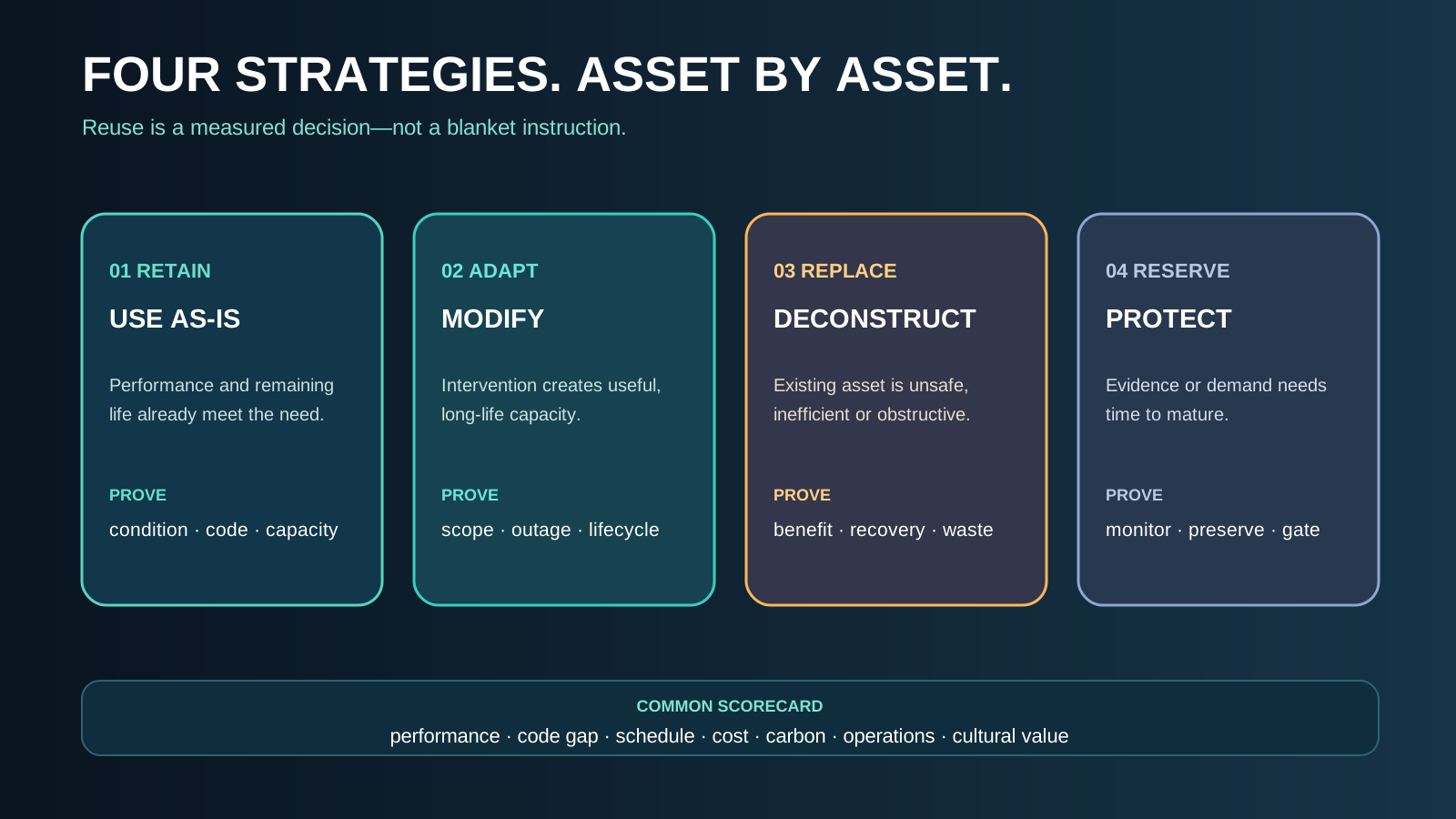
For each building, structure, utility, road, rail spur, water system, and landscape element, compare four strategies: retain as-is, adapt, replace, or reserve for later. Score usable performance, code gap, life remaining, schedule, cost range, carbon consequence, operating risk, cultural value, and interference with ultimate capacity. Keep reuse claims tied to measured quantities and performance. Selective demolition can unlock safer phasing and better long-term efficiency; retention is valuable when it avoids impact without constraining the campus mission.
Create a code and entitlement conversion matrix
Document current legal use and the proposed data-center use, zoning, power generation, fuel and batteries, height, noise, lighting, air emissions, water withdrawal and discharge, stormwater, wetlands, heritage, traffic, security, fire service, building classification, and demolition permits. Identify nonconforming conditions and whether alterations trigger upgrades. Schedule public, utility, environmental, and building approvals against land-control milestones. Industrial history may help community understanding, but it does not waive modern review or create a right to build the ultimate campus.
Reuse Strategy Scorecard
| Strategy | Use when | Prove | Avoid |
|---|---|---|---|
| Retain | Asset performs with minor intervention | Condition, capacity, code and remaining life | Retention based only on appearance |
| Adapt | Modification creates useful long-life capacity | Upgrade scope, interfaces, outage and lifecycle cost | Accumulated compromises that impair operations |
| Replace | Existing asset is unsafe, inefficient or obstructive | Replacement benefit and responsible deconstruction | Default demolition without a reuse comparison |
| Reserve | Evidence or demand is not mature enough | Protection, monitoring and future decision gate | Neglect that destroys future option value |
Apply the scorecard to individual assets. A single site may legitimately use all four strategies.
Plan remediation, demolition, backbone, and Phase 1 as one sequence
Set enabling packages around safe access, hazardous-material removal, utility isolation, demolition, remediation, earthwork, temporary drainage, foundations, substation work, backbone routes, and retained-building stabilization. Protect operations and neighbors from dust, noise, traffic, vibration, and uncontrolled runoff. Create hold points for unexpected conditions. Keep routes for later phases open and avoid using the only expansion corridor for temporary works. The schedule should show accepted compute capacity, not simply site clearance or shell completion.
Quantify whole-life benefit and community value
Compare the selected brownfield plan with a credible greenfield or full-replacement baseline. Include embodied carbon retained and added, remediation, operational energy and water, grid impacts, habitat and land take, transport, employment, tax base, heat-reuse opportunity, visual and acoustic effects, and long-term stewardship. Report uncertainties and disbenefits. A strong reuse case restores land and infrastructure while delivering an efficient campus; it should not use an attractive heritage shell to distract from higher operational or environmental burden.
Early screening checklist
What to verify before advancing this site.
- Land control is staged against objective diligence and utility gates
- Power, environment, ground, structure, approvals, and delivery share one site model
- Utility capacity, ownership, rights, upgrades, tariff, and dates are documented
- Contamination is characterized with responsibility, cleanup, monitoring, and contingency
- Existing structures are tested for actual loads, code, moisture, fire, and replacement access
- Every major asset has a retain, adapt, replace, or reserve decision
- Entitlement and code conversion are mapped to the ultimate campus, not only Phase 1
- Remediation, demolition, backbone, and construction are one sequenced plan
- Unexpected-condition hold points and commercial allocation are explicit
- Whole-life performance is compared with a credible alternative and uncertainties disclosed
What DCFR would flag
Risks surfaced at the screening stage.
DCFR would flag a brownfield acquisition justified by visible industrial infrastructure without written utility capacity, bounded environmental liability, verified structural reuse, a code-conversion path, integrated remediation and construction phasing, and an asset-by-asset reuse case.
Professional confirmation required
Items requiring licensed validation.
Confirm title, easements, utility rights, capacity, environmental liability, geotechnical and structural condition, planning, building and fire code, heritage, demolition, logistics, cost, schedule, insurance, and community commitments with the seller, owner, utility, licensed professionals, regulators, authorities, insurers, and legal counsel.
Final takeaway
A brownfield becomes a compute-campus advantage only when inherited assets and liabilities are converted into verified, phased, and operable capacity.
Screen up to 20 candidate sites before selecting one for the full DCFR report.
Each DCFR Report Package includes a preliminary 20-site comparison PDF / export package plus one selected planning-grade feasibility report.