
DCFR Insight 87 / Land Development · Future Expansion Protection
How Do You Protect Future Expansion Before the First Data Center Is Built?
Future capacity is often lost through small early decisions: an undersized easement, a poorly placed road, a stormwater basin in the wrong location, or a utility corridor that cannot be expanded.
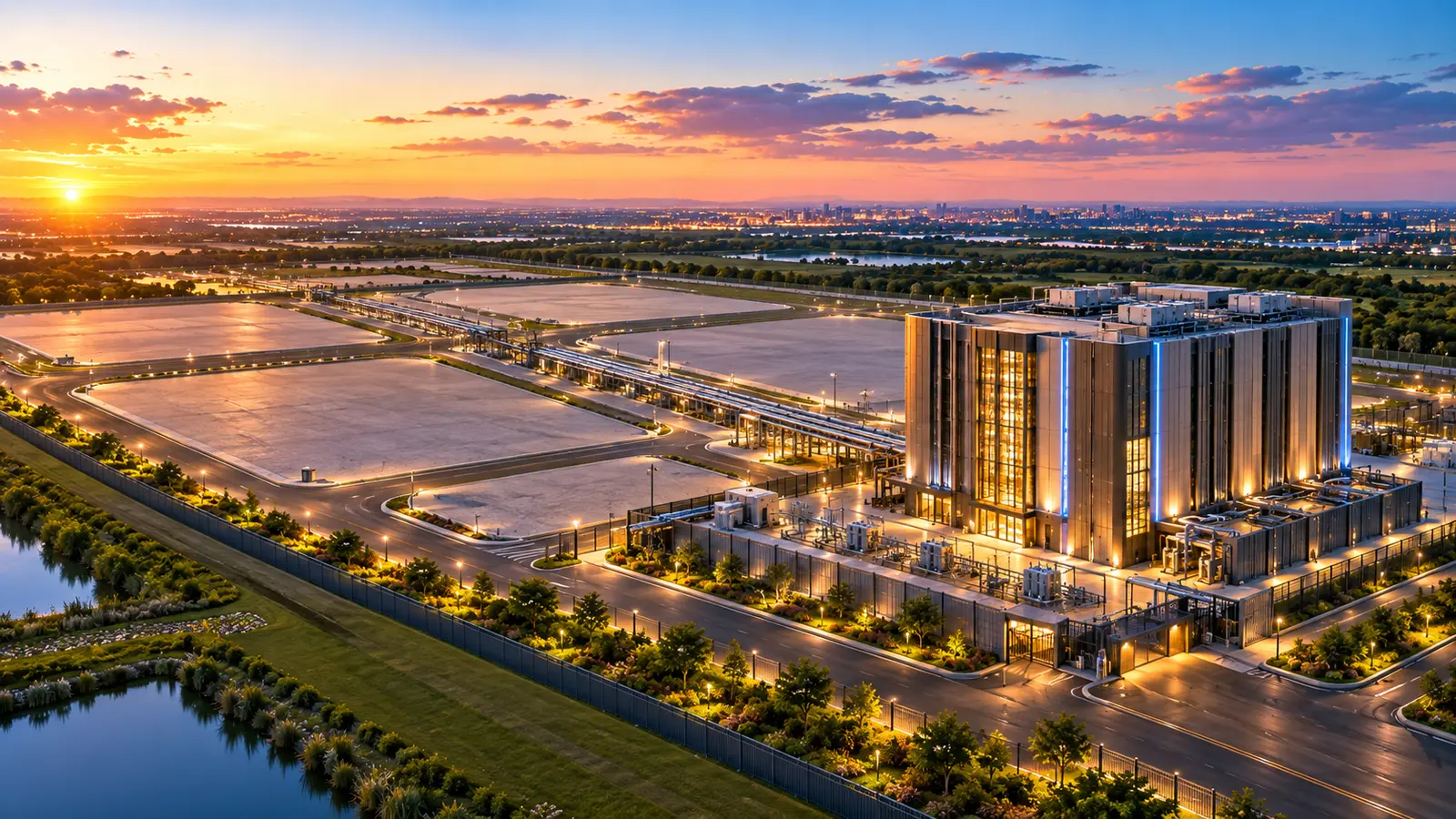
Define the ultimate campus before locking Phase 1
The starting point is not whether the parcel looks attractive. Define the business outcome the land must support and the evidence required to prove it. For this topic, the controlling inputs include ultimate building and MW plan, future substations and feeders, and utility and access easements. State assumptions explicitly so an early concept cannot quietly become a committed basis without validation.
Reserve rights, not just empty land
Build the evidence on one controlled site and schedule basis. Reconcile ultimate building and MW plan, future substations and feeders, utility and access easements, stormwater and environmental reserves, road and security expansion, and maintenance and equipment replacement routes rather than allowing each discipline to work from a different boundary, phasing assumption, utility date, or campus concept. When evidence is preliminary, label its confidence level and identify the party responsible for confirmation.

Size shared infrastructure for the chosen growth strategy
A practical workflow is to draw ultimate constraints first; then identify irreversible Phase 1 choices; then reserve land and rights; then size expandable systems; then document future-phase assumptions; then review every Phase 1 change against ultimate plan. The sequence is intentionally decision-led: each activity should either confirm feasibility, expose a dependency, quantify an impact, create a mitigation, or support a commercial or investment gate.
Development Control Matrix
| Control question | Evidence required | If unresolved | Decision effect |
|---|---|---|---|
| What must be true? | ultimate building and MW plan + future substations and feeders | Assign owner and confirmation date | Do not treat as confirmed |
| What controls timing? | document future-phase assumptions + review every Phase 1 change against ultimate plan | Build downside scenario | Adjust capacity date or commercial milestone |
| What can defeat the site? | future phase land controlled but not utility rights + easements too narrow for added circuits | Mitigate, redesign, reprice, or exit | Escalate to investment gate |
| What can be traded? | future-proofing versus near-term capital + reserved acreage versus immediate density | Compare alternatives on one basis | Choose risk-adjusted outcome |
Planning-grade framework. Applicable law, utility rules, entitlement procedures, engineering criteria, transaction terms, and licensed-professional requirements vary by jurisdiction and project.
Protect replacement and maintenance access
The highest-consequence failure modes include future phase land controlled but not utility rights, easements too narrow for added circuits, stormwater consuming future pad area, permanent roads blocking expansion, and Phase 1 conditions of approval limiting later use. Separate these from ordinary design development. A red flag belongs in the executive risk register when it can materially change deliverable capacity, approval probability, schedule, capital exposure, operations, or the ability to exit the transaction.

Keep future approvals and utility options open
Real sites rarely optimize every variable at once. Typical trade-offs include future-proofing versus near-term capital, reserved acreage versus immediate density, oversized corridors versus land efficiency, and flexibility versus standardization. Compare alternatives against the same capacity, date, cost, and risk basis. A mitigation that solves one discipline but creates a larger entitlement, utility, construction, or operating problem is not a complete solution.

Audit Phase 1 decisions for irreversible effects
Protect future capacity through geometry, legal rights, infrastructure sizing, approval strategy, and operating access—not by labeling vacant land 'future phase.' Record the decision, assumptions, unresolved confirmations, owner, target date, and trigger for reconsideration. That record becomes the bridge between diligence, transaction documents, entitlement, design, infrastructure delivery, construction, and future portfolio learning.
Early screening checklist
What to verify before advancing this site.
- The decision objective for Series Part 19 is explicit
- Ultimate building and MW plan is supported by current evidence
- Future substations and feeders is supported by current evidence
- Utility and access easements is supported by current evidence
- Stormwater and environmental reserves is supported by current evidence
- Cross-discipline assumptions use one controlled plan and phasing basis
- Material red flags have an owner, mitigation, cost and schedule effect
- Commercial milestones do not outrun technical and entitlement evidence
- The recommendation states what would cause the decision to change
What DCFR would flag
Risks surfaced at the screening stage.
DCFR would flag any site decision where future phase land controlled but not utility rights, easements too narrow for added circuits, stormwater consuming future pad area are still being treated as background assumptions rather than controlled development risks with evidence, ownership, and a decision path.
Professional confirmation required
Items requiring licensed validation.
Confirm project-specific land rights, zoning and entitlement requirements, utility capacity and agreements, environmental jurisdiction, civil and geotechnical criteria, life-safety requirements, infrastructure obligations, costs, schedules, and transaction terms with the applicable authorities, utilities, qualified counsel, and appropriately licensed design and technical professionals.
Final takeaway
Protect future capacity through geometry, legal rights, infrastructure sizing, approval strategy, and operating access—not by labeling vacant land 'future phase.'
Screen up to 20 candidate sites before selecting one for the full DCFR report.
Each DCFR Report Package includes a preliminary 20-site comparison PDF / export package plus one selected planning-grade feasibility report.