
DCFR Insight 68 / Delivery + Governance
Data Center Commissioning and Operational Handover
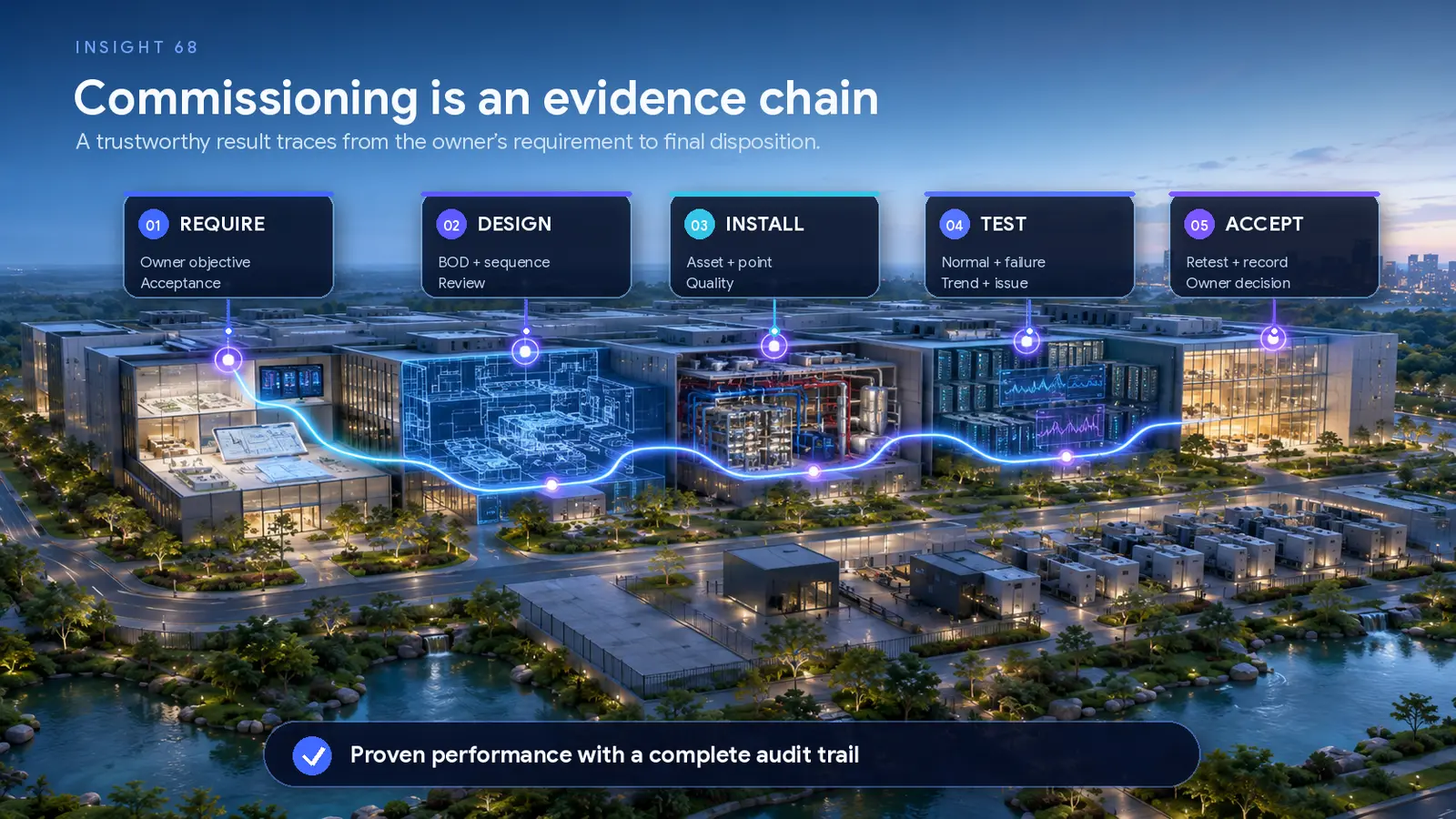
Commissioning is the evidence chain that connects owner requirements to safe, repeatable operation. It begins before design, intensifies through factory and field testing, and ends only when the operating team can control the facility without project-team dependency.
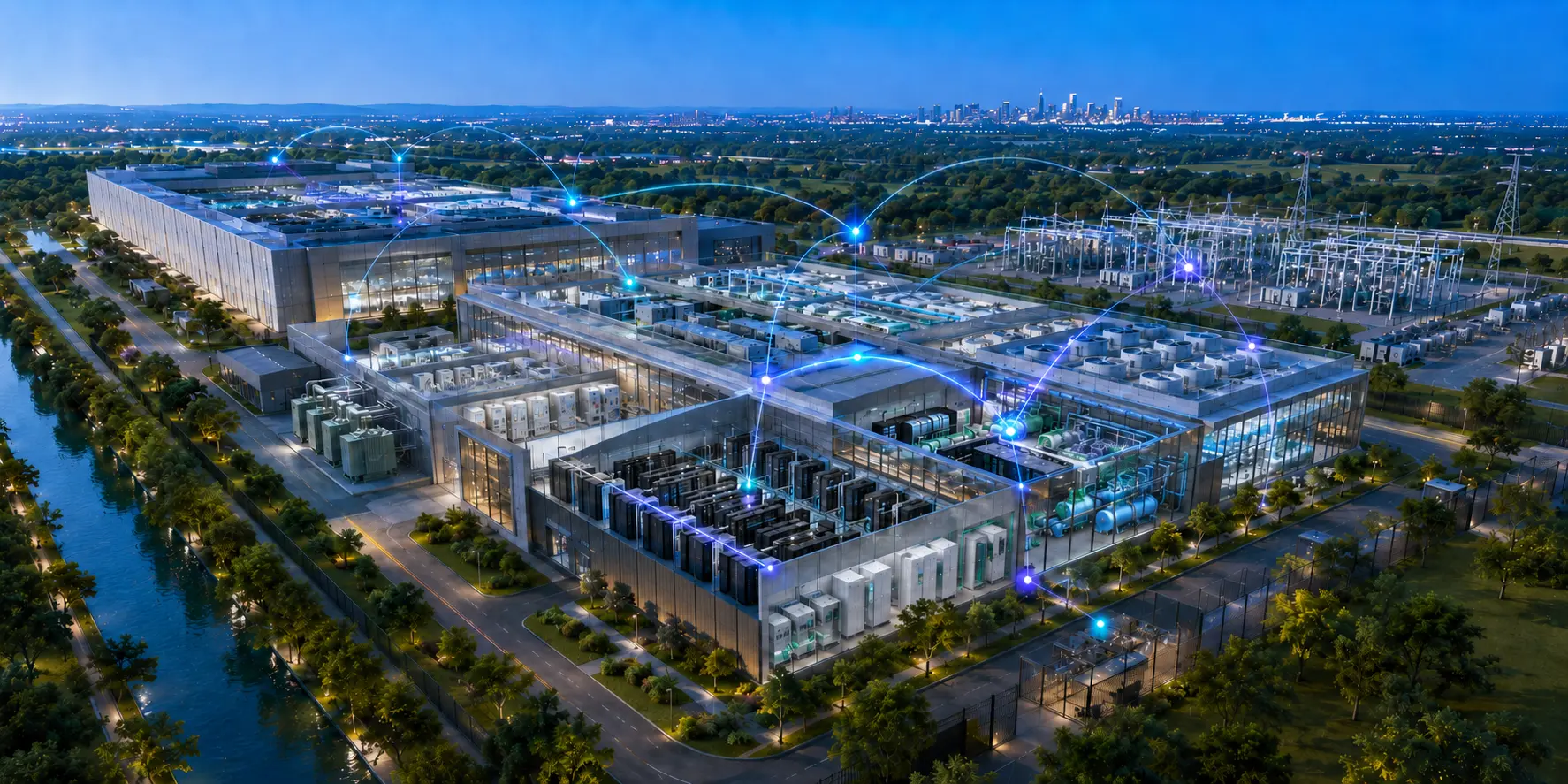
Commission the owner’s requirements
The commissioning plan should begin with measurable Owner’s Project Requirements covering capacity, redundancy, availability, maintainability, environmental conditions, efficiency, water, life safety, security, controls, recovery, staffing, and phased operation. The Basis of Design explains how the systems meet them; submittals and sequences implement them; test scripts prove them. Requirements that cannot be traced to a verification method remain aspirations rather than acceptance criteria.
Build one evidence chain across every level
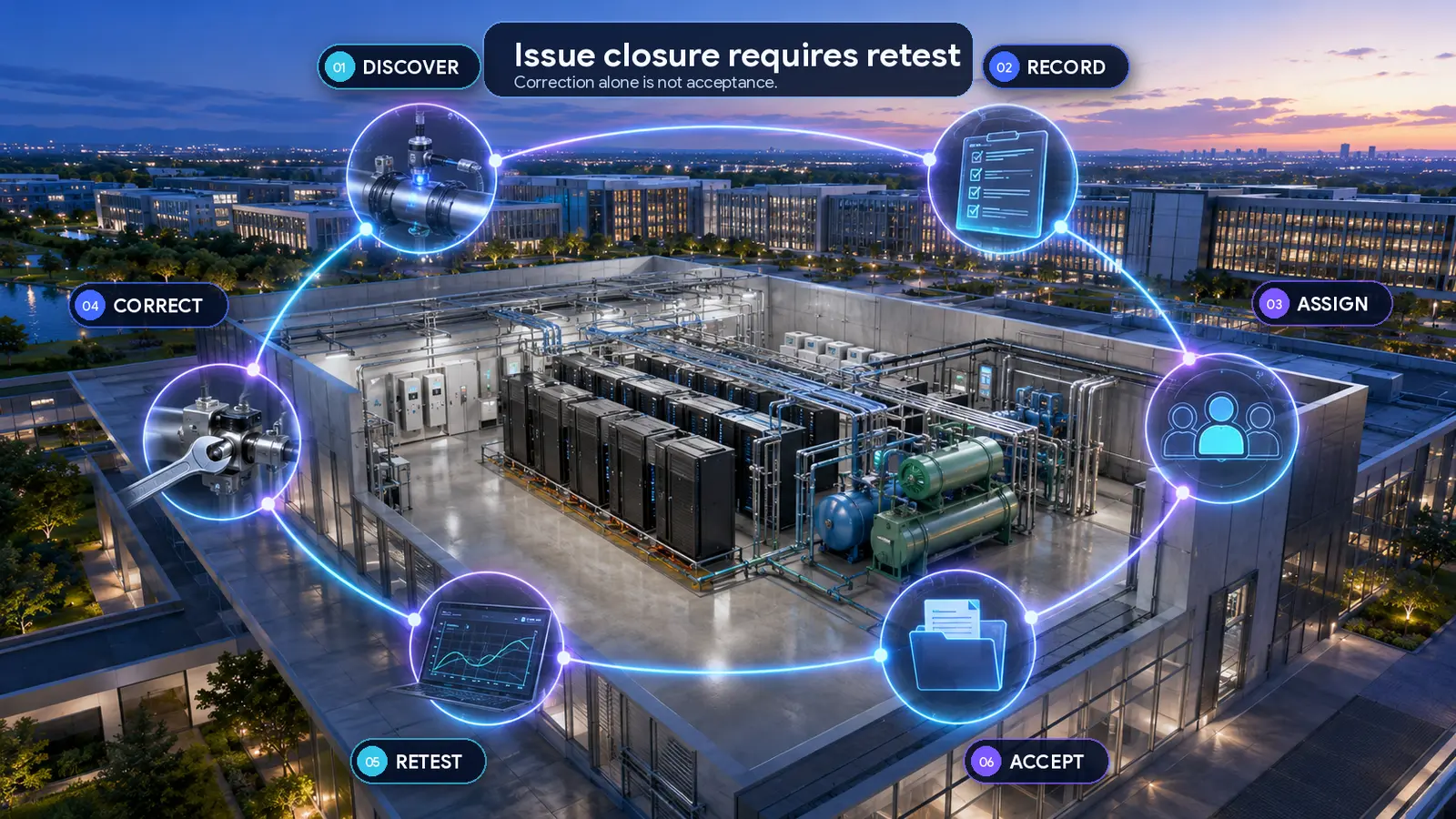
Organize testing from document review and factory acceptance through installation verification, pre-functional checks, component startup, functional performance, system testing, integrated systems testing, reliability demonstration, and seasonal or deferred testing. A failed point should link to the exact asset, drawing, sequence, software version, test step, issue record, correction, retest, and approval. Trend data and event logs should use synchronized time so teams can reconstruct complex interactions.
Prove normal, degraded, and recovery modes
Test the operating state, credible failures, maintenance states, restoration, and transitions between them. Scenarios may include utility loss and return, generator failure, stuck breaker, UPS module unavailable, battery limitation, cooling unit or pump loss, controls network interruption, sensor failure, fire alarm interface, water loss, fuel constraint, and simultaneous maintenance. Scripts should define initial condition, load, action, expected sequence, permissible transient, alarms, operator response, safety stop, data capture, and acceptance.
Control temporary conditions and open issues
Temporary generators, bypasses, jumpers, disabled alarms, forced control points, incomplete redundancy, provisional setpoints, construction network connections, and unresolved defects must appear in a live configuration and risk register. Classify open items by safety, capacity, reliability, efficiency, maintainability, documentation, and appearance; assign owner, due date, compensating measure, retest, and authority to accept. A commercial date should never hide an operating condition the facility team has not agreed to manage.
Make operational readiness a formal gate
The operator should accept people, systems, information, supply chain, and governance together. Verify staffed roles, competency and scenario training, emergency procedures, switching authority, maintenance program, computerized maintenance data, asset hierarchy, setpoints, alarm rationalization, cybersecurity accounts, backups, licenses, spares, consumables, vendor support, warranty terms, permits, record documents, test evidence, and escalation paths. Use field demonstrations, not attendance sheets, to confirm competence.
Commissioning acceptance ladder
| Level | Core question | Required record |
|---|---|---|
| Requirements and design | Is intended performance defined and engineered? | OPR, BOD, review comments, resolved deviations |
| Factory | Does assembled equipment meet the approved data and sequence? | Witness plan, calibrated results, defects, release |
| Installation | Is the asset complete, identified, safe, clean, and connected? | Inspection and pre-functional checklist |
| Functional | Does each system perform in normal and failure modes? | Approved script, trends, issues, retest |
| Integrated | Do interacting systems and operators respond correctly together? | Scenario record, time-synchronized data, acceptance |
| Operational | Can the team sustain performance without project dependency? | Readiness certificate, procedures, training, data, spares |
Commissioning levels and terminology should be aligned with the project specification, customer agreement, authority requirements, and the owner’s operating standard.
Continue verification after occupancy
Some performance can be proven only under seasonal weather, full load, later phases, or actual operating patterns. Define deferred and seasonal tests, trend windows, performance baselines, warranty observations, remaining training, post-occupancy tuning, and final issue closure before the project team demobilizes. Feed recurrent defects, nuisance alarms, sequence changes, maintenance burden, energy, water, and recovery performance back into the reference design and next commissioning plan.
Early screening checklist
What to verify before advancing this site.
- Every commissioning script traces to an owner requirement, approved design, sequence, and acceptance criterion
- Factory, installation, startup, functional, integrated, reliability, seasonal, and deferred tests have defined boundaries
- Scenarios test normal, degraded, maintenance, recovery, and transition states with safe stop conditions
- Temporary conditions and open issues state operating consequence, compensating measure, owner, retest, and acceptance authority
- Operators demonstrate switching, alarms, failures, emergency response, maintenance, restoration, and escalation competence
- Asset data, controls backups, licenses, spares, warranties, procedures, permits, and test evidence are complete and usable
What DCFR would flag
Risks surfaced at the screening stage.
DCFR would flag commissioning treated as an end-of-project demonstration while owner requirements, factory tests, controls versions, integrated failure scenarios, temporary conditions, operator competence, asset data, deferred tests, and issue closure are incomplete.
Professional confirmation required
Items requiring licensed validation.
Confirm commissioning scope, independence, requirements, scripts, instrumentation, load banks, temporary systems, electrical safety, life-safety interfaces, utility coordination, software and cybersecurity, performance criteria, issue authority, customer witnessing, operational readiness, permits, warranties, seasonal testing, and final acceptance with the owner, operator, commissioning authority, licensed professionals, contractors, vendors, serving utility, authorities, customer, insurer, and counsel.
Final takeaway
The facility is ready only when its performance is proven, its configuration is controlled, and its operators can safely manage normal operation, failure, maintenance, and recovery.
Screen up to 20 candidate sites before selecting one for the full DCFR report.
Each DCFR Report Package includes a preliminary 20-site comparison PDF / export package plus one selected planning-grade feasibility report.